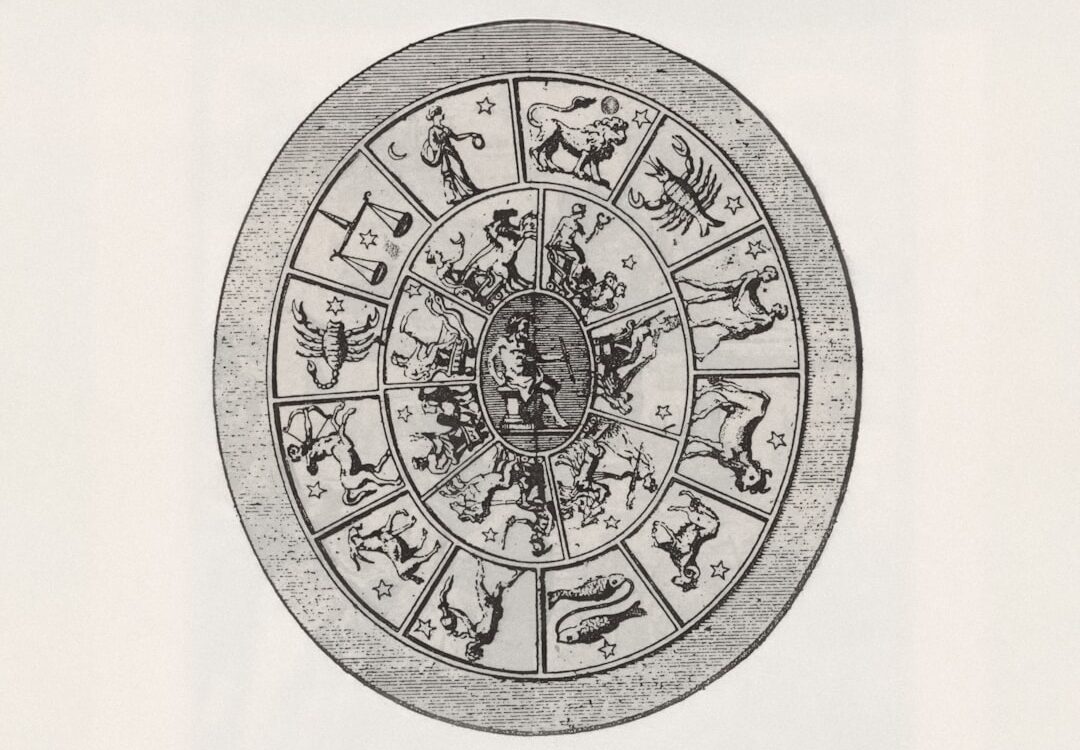
Search for the best Zi Wei Dou Shu (紫微斗数 zǐwēi dǒushù) calculator and you will find plenty of tools that promise a chart in seconds. Most of them can place the stars. The real difference is what they show you afterwards, and whether you can read it. A chart is a map, not a verdict, and a good calculator hands you a map you can actually use. This guide walks through what a serious Zi Wei Dou Shu tool needs to do, so you can judge any option on features rather than marketing.
First, what a Zi Wei Dou Shu calculator is doing
Zi Wei Dou Shu, or Purple Star Astrology, is the other great birth-chart system beside Ba Zi (八字 bāzì). Where Ba Zi reads a life through five elements and the Ten Gods, Zi Wei arranges it on a grid of twelve houses populated by stars, chief among them 紫微 (Zǐwēi), the Emperor or Pole Star.
The chart is deterministic. It is computed from your lunar birth date and hour, converted from the solar calendar, then run through the Five Element Bureau (五行局 wǔxíng jú) that fixes where 紫微 sits. Every other star follows from fixed placement rules. This matters when you choose a tool: the calculation is not a matter of opinion, so accurate solar-to-lunar conversion and a correct birth hour are the foundation of everything. A calculator that gets the hour branch wrong will place your palaces wrong, and no amount of interpretation fixes that.
Does it show all twelve palaces?
The twelve palaces (十二宫 shí’èr gōng) are the backbone of the reading. Each governs a life domain, and a chart is only as useful as the palaces it lets you inspect. At minimum, look for the full ring:
- 命宫 (mìng gōng) — Life and self, the core of the chart
- 夫妻宫 (fūqī gōng) — Marriage and spouse
- 财帛宫 (cáibó gōng) — Wealth and cash flow
- 官禄宫 (guānlù gōng) — Career and status
- 疾厄宫 (jí’è gōng) — Health and vulnerabilities
- 田宅宫 (tiánzhái gōng) — Property and home
- 福德宫 (fúdé gōng) — Wellbeing and inner fortune
Those sit alongside the palaces for siblings, children, travel, friends, and parents. A good calculator also marks the 身宫 (shēn gōng), the Body palace, which overlaps one of the twelve and flags where the second half of life carries its weight. If a tool only surfaces a headline like “your main star” without letting you read palace by palace, it is showing you the cover of the book, not the chapters.
Major stars, minor stars, and honest depth
There are fourteen major stars (十四主星 shísì zhǔxīng), split into a northern group led by 紫微 and a southern group led by 天府 (Tiānfǔ, the Treasury). These carry the main character of each palace: 太阳 (Tàiyáng, the Sun) for radiance, 武曲 (Wǔqū) for wealth and resolve, 七杀 (Qīshā, the General) for decisiveness, and so on.
But major stars alone are a thin reading. The minor and auxiliary stars are what give a chart its texture. The six auspicious stars (六吉 liù jí) such as 左辅 (Zuǒ Fǔ) 右弼 (Yòu Bì) for support and 文昌 (Wén Chāng) 文曲 (Wén Qū) for scholarship, and the six inauspicious stars (六煞 liù shā) such as 擎羊 (Qíng Yáng) 陀罗 (Tuó Luó) for friction and 火星 (Huǒ Xīng) 铃星 (Líng Xīng) for sudden force, shift how a palace actually behaves. A calculator worth using places both, and lets you see them in each palace rather than hiding them. You do not need it to list every obscure star, but the working set should be there.
The four transformations, the layer most tools skip
If you check one advanced feature, check this one. The four transformations (四化 sìhuà) are the dynamic layer of Zi Wei Dou Shu. From your birth-year stem, four stars are transformed: 化禄 (Huà Lù, resource and smoothness), 化权 (Huà Quán, power and authority), 化科 (Huà Kē, reputation), and 化忌 (Huà Jì, obstacle and fixation).
The 四化 are where a static grid starts to tell a story, because they connect palaces to one another. This is the heart of the 飞星派 (Fēi Xīng, Flying Star) approach, as opposed to the 三合派 (Sān Hé, Trinity) approach that reads palaces in trines. Many free calculators stop before they compute the transformations. A tool that shows them, correctly derived from the year stem, is doing markedly more work than one that does not.
Can you read it in English?
Most Zi Wei tools were built for a Chinese-reading audience, which is fine if you read the hanzi fluently. If you do not, a wall of unglossed characters is a chart you cannot use. Look for a calculator that names each palace and star in English alongside the hanzi, so you can follow which star sits where and what it governs. Clear English is not dumbing the system down; it is the difference between a chart you can study and a picture you can only admire.
A short checklist for any Zi Wei Dou Shu calculator
- Accurate solar-to-lunar conversion and a correct birth hour
- All twelve palaces shown, plus the 身宫
- All fourteen major stars, correctly placed by the Five Element Bureau
- The working minor stars, auspicious and inauspicious, in each palace
- The four transformations (四化) derived from your year stem
- English labelling next to the hanzi
- Free to plot, with no pressure to pay before you see your own chart
The Butcher Boy free Zi Wei Dou Shu tool
We built our free Zi Wei Dou Shu chart tool against exactly this checklist. It converts your birth details, places the fourteen major stars through the Five Element Bureau, adds the working minor stars, and computes the four transformations from your year stem, then lays the whole thing out across the twelve palaces with English labels beside the hanzi. It is free to plot, and it does not ask for anything before it shows you your chart.
It is not the only capable calculator out there, and we would not claim otherwise. Other tools place the stars correctly too. What we aimed for is a chart a non-specialist can genuinely read, in the same calm, unmystified spirit as our free Ba Zi calculator. If you are new to Chinese birth charts in general, the What is Ba Zi hub is a gentler starting point, since the two systems are usually read together: Ba Zi for elemental balance and timing, Zi Wei for detailed life-domain reading palace by palace.
Where to go from here
Plot your chart with the free Zi Wei Dou Shu tool and read your palaces at your own pace. If you would rather sit with someone over the finished chart, a paid reading is one hour, your chart on the table, and a written summary afterwards. No fear-selling, no pressure. The chart is a map either way; what you do with it is the interesting part.