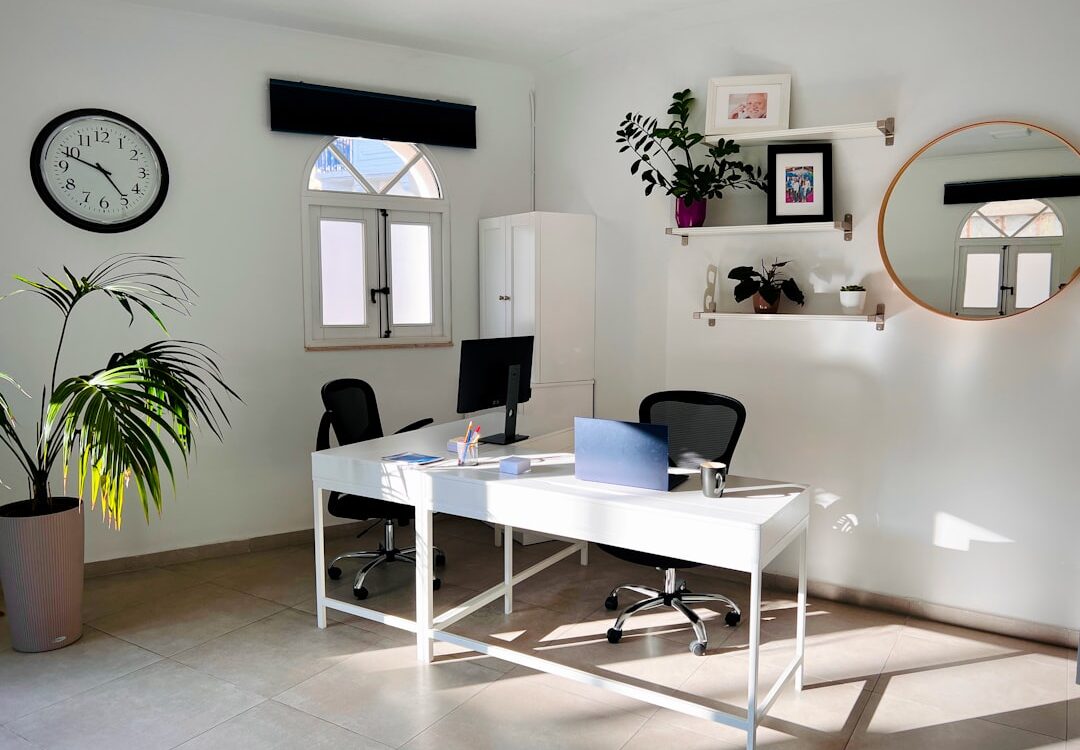
Ask whether Feng Shui (风水 fēng shuǐ) is real and you usually get one of two answers: a true believer who credits it for everything, or a sceptic who files it next to horoscopes and lucky charms. Neither is very useful if you are simply trying to decide whether to move your bed, hire a consultant, or ignore the whole thing. The honest answer sits in between, and it depends almost entirely on what you mean by the word “real.”
The short answer: it depends what part you are asking about
Feng Shui is not one claim. It is a bundle of ideas of very different quality. Some of them describe how physical spaces affect how people feel and function, and those hold up well. Others are direction-and-timing formulas that are internally consistent but hard to test. And a thin outer layer is pure superstition, often amplified by people selling something. Treating all three as a single yes-or-no question is where most of the confusion comes from.
The tradition itself already separates these. The older Form School (峦头 luán tóu) reads landforms, light, and the flow of a space. The Compass School (理气 lǐ qì) uses direction and time formulas measured with a luopan (罗盘 luó pán). Form School is the accessible, universal layer, and it is also the part with the most obvious real-world grounding.
The defensible core: light, flow, and orientation
Strip away the mysticism and a large part of practical Feng Shui is good spatial common sense, described in an older vocabulary. The central idea is qi (氣 qì), the vital current a space either supports or blocks. You do not have to believe in an invisible energy to notice that the recommendations track things we can measure.
The clearest example is the commanding position (命位 mìng wèi). The rule is to place what matters most — your bed, your desk, the stove — so you can see the door without being directly in line with it, with your back to a solid wall. Framed in plain terms, this is about not being startled, having a clear view of your environment, and feeling secure enough to concentrate or rest. People do sleep and work better when they are not sitting with their back to an open doorway.
The same goes for most of the everyday advice. Clear clutter so a room is easy to move through. Let in natural light. Keep pathways open. Do not sleep with your feet pointing straight out the door or your head under a window. These are Form School principles, and they line up with what we already know about how light, order, and a sense of safety affect mood, sleep, and focus. That part of Feng Shui is real in the ordinary sense: arrange a space thoughtfully and the people in it tend to do better.
Orientation is a softer case. Facing a desk toward a view, positioning a home to catch morning light, siting a building away from a wind tunnel — these have obvious functional value. The more specific personalised direction formulas, like the Kua system (本命卦 běn mìng guà) that sorts people into east and west groups, are consistent and worth knowing, but they are belief-based rather than demonstrated. A fair reading keeps them clearly separate from the physical basics.
Where it stops being defensible: superstition and hard-sell
The trouble starts when arrangement becomes a lever over fate, and when fear does the selling. If someone tells you a mirror facing the bed will wreck your marriage, that a single “wealth corner” decides your income, or that an urgent purchase — a specific crystal, a gourd, a costly cure — is the only thing standing between you and disaster, you have left considered spatial design and entered something else.
Two honest tests separate the defensible from the dubious. First, does the claim have a plausible mechanism, or does it only work through belief? A clear path to the door has a mechanism. A particular coin under a doormat does not. Second, is fear or urgency being used to close a sale? Grounded practice describes tendencies and offers reversible, low-cost adjustments. Fear-selling manufactures a crisis and an expensive fix. The free chart tool at app.butcherboy.com.sg takes the opposite approach: it shows you the structure and lets you sit with it, with nothing to buy.
A fair side-by-side
| Defensible principle | Superstition / hard-sell |
|---|---|
| See the door, back to a wall (commanding position) | A cursed “death position” no cure can fully fix |
| Clear clutter and open pathways | One blocked corner is bankrupting you |
| Maximise natural light and airflow | Only a paid ritual can “activate” the light |
| Consider orientation for view and comfort | Your exact lucky direction guarantees wealth |
| Reversible, low-cost adjustments you can test | Urgent, expensive cures sold on fear |
| “Schools differ on this” stated honestly | Absolute claims, no room for doubt |
Read the left column and Feng Shui looks like a centuries-old design language for calm, functional, human-centred rooms. Read the right column and it looks like the caricature the sceptics reject. Both columns exist in the market, which is exactly why a flat yes-or-no fails.
How to tell a grounded practitioner from a salesperson
A practitioner worth your time will lead with the physical layer — light, flow, the placement of your bed and desk — before touching any formula, and will name where the schools disagree. Personalised layers, like your Kua directions or a building’s Flying Stars (玄空飞星 xuán kōng fēi xīng) chart, are presented as one input among several, not as a verdict. The advice is mostly things you can adjust yourself. And there is no ticking clock forcing a purchase.
The five elements (五行 wǔ xíng) — Wood, Fire, Earth, Metal, Water — are the shared grammar underneath all of this, the same cycle that runs through the rest of Chinese metaphysics. If you want to understand how elements balance and clash before applying them to a room, the plainest starting point is the five elements explained. It makes the “cures” logic far less mysterious, because you can see the productive and controlling cycles it rests on.
Where Ba Zi fits, and how to test any of this yourself
Feng Shui reads the room. Its sibling, Ba Zi (八字 bāzì), reads the person — the same five-element framework applied to a birth chart instead of a floor plan. Neither is a horoscope in the tabloid sense. Both are best treated as maps you interrogate, not fortunes handed down. If you are curious how the underlying system actually works before deciding whether any of it is “real” for you, the introduction to Ba Zi is a fair, unhurried place to begin.
The most honest way to judge a metaphysics system is to run your own data through it and see whether the structure it returns describes anything you recognise, with no salesperson in the room. You can do that in a couple of minutes with the free Ba Zi chart tool — plot your chart, read the structure, and draw your own conclusions. If you later want a person to walk through what it means for a specific decision, a paid reading is one hour with the chart on the table and a written summary, no fear-selling. Start with the free tool. That is the point where “is Feng Shui real” stops being a debate and becomes something you can actually test for yourself.