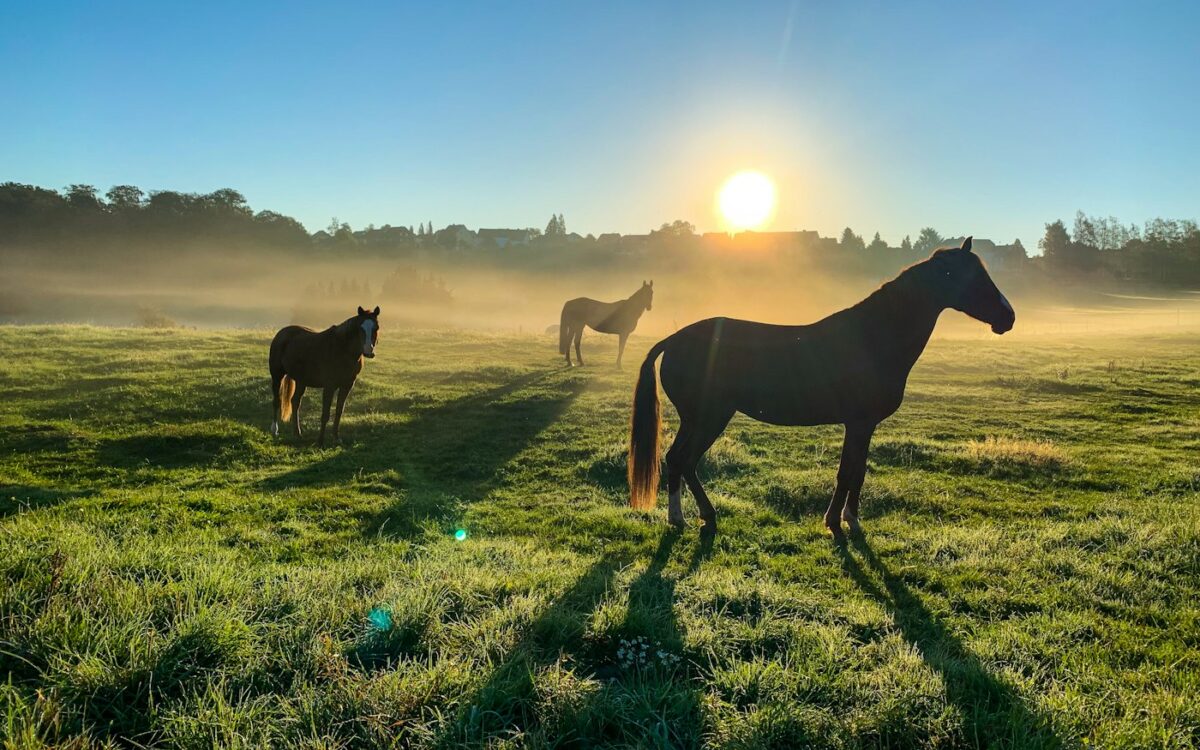
The Sky Horse (驿马 Yìmǎ) is the symbolic star (神煞 shénshà) of movement — travel, relocation, and career mobility. Its old name means “post horse,” the relay mount that carried messages between stations, and that image holds: a chart with a strong Sky Horse rarely sits still. The Sky Horse bazi star marks the restless, the traveller, and the person whose fortune changes when the scenery does.
How to find your Sky Horse
The Sky Horse is found from a branch trine (三合 sānhé). Take your year branch or your day branch, find its trine, and read off the star branch. Then check whether it appears among the four branches of your chart.
| Year or day branch trine | Sky Horse branch |
|---|---|
| 申子辰 (Monkey, Rat, Dragon) | 寅 Tiger |
| 寅午戌 (Tiger, Horse, Dog) | 申 Monkey |
| 巳酉丑 (Snake, Rooster, Ox) | 亥 Pig |
| 亥卯未 (Pig, Rabbit, Goat) | 巳 Snake |
A worked example: if your day branch is 子 Rat, that sits in the 申子辰 trine, so your Sky Horse branch is 寅 Tiger. Scan all four branches — year, month, day and hour — and if 寅 appears, you carry the Sky Horse. Plot your pillars first with the free calculator, then run the trine lookup against the branches it returns.
One pattern worth noticing: whichever trine you start from, the answer is always 寅, 申, 巳 or 亥 — the four corner branches where each elemental season begins. The tradition reads those corners as the departure points of the branch wheel, which is exactly the flavour the post horse carries.
Two keys, sometimes two horses
Because the lookup accepts either your year branch or your day branch, the two can sit in different trines and hand you two different candidate branches. That is not an error; it is two lenses. The year-derived Sky Horse is the older convention and colours the outer life — family, origins, the public record of moves. The day-derived Sky Horse sits closer to the self and the marriage, and tends to read more personally. We run both, note any hit from either, and give the day-derived star slightly more personal weight, the same way we do with the Peach Blossom, which uses the identical trine method.
What it means when you have it
The Sky Horse describes a life that moves — physically, geographically, or across roles. It favours careers built on mobility: trade, logistics, travel, foreign postings, sales that cover territory. Where it sits shapes the flavour. In the year or month it often reads as movement in early or family life; in the day or hour, as relocation tied to marriage, or restlessness that runs into later years.
The Sky Horse has a signature trigger: the clash (冲 chōng). When a luck pillar (大运 dàyùn) or annual branch clashes the Sky Horse, the star spurs — sudden moves, unplanned relocations, a job that uproots you. A quiet Sky Horse can sit dormant for years and then, on the right clash, launch. That is why timing this star well matters as much as finding it.
In charts we read, a Sky Horse combined and held in place — bound by a combination rather than a clash — reads very differently from one that is struck open. The first is mobility kept on a leash: the person travels, but returns. The second is departure. Two people can carry the same Sky Horse branch and live entirely different lives depending on what the rest of the chart does to it.
It is also worth saying what the star does not license. A Sky Horse is not a promise of glamorous travel, and its absence is not a sentence to stay put. Movement in the modern sense includes role changes, industry switches and portfolio careers — the star marks the appetite and the pattern, not the boarding pass. Its gentler cousin, the Golden Carriage, makes the contrast plain: the carriage is carried in comfort, the post horse rides out.
Questions we hear about the Sky Horse
I have the Sky Horse but I have never moved. Is the lookup wrong?
Probably not — the star is often dormant until a clash or a supporting luck pillar wakes it. And in plenty of charts the movement expresses itself as career mobility rather than geography: new roles, new industries, restlessness that changes the work rather than the address.
Is a clashed Sky Horse bad?
Not bad — sudden. The clash is the star’s accelerator, and sudden moves can be promotions abroad as easily as disruptions. The practical use is planning: in a year that clashes your Sky Horse, build slack into your commitments so that if the move comes, it finds you ready.
Can a luck pillar bring a Sky Horse I do not have natally?
Yes. A luck pillar or annual branch landing on your Sky Horse branch activates the theme for that season — a window when relocation and mobility are simply more available than usual.
Keeping it in proportion
Symbolic stars are seasoning, not the meal. The Sky Horse tells you movement is in the flavour; it does not tell you whether the movement is prosperous or exhausting. That verdict comes from the structure — the Day Master (日主 rìzhǔ), its strength, and the ten gods (十神 shíshén) carried by the pillar. A Sky Horse tied to a wealth star can mean money made abroad; the same star tied to a draining influence can mean running without arriving.
So read the star after the chart’s shape is clear. Work through the reading order first, weigh whether the Day Master is strong or weak, and let the Sky Horse describe the tempo rather than the outcome. The classic mistake is to promise “big travel luck” from the star alone, without checking what the movement is attached to.
For the wider set, see the symbolic stars overview. The Sky Horse pairs naturally with the General star, since the person who moves and the person who commands are often reading the same ambition from two angles.
Find the Sky Horse in your own chart — plot your four pillars free with the calculator, then run the trine lookup above.