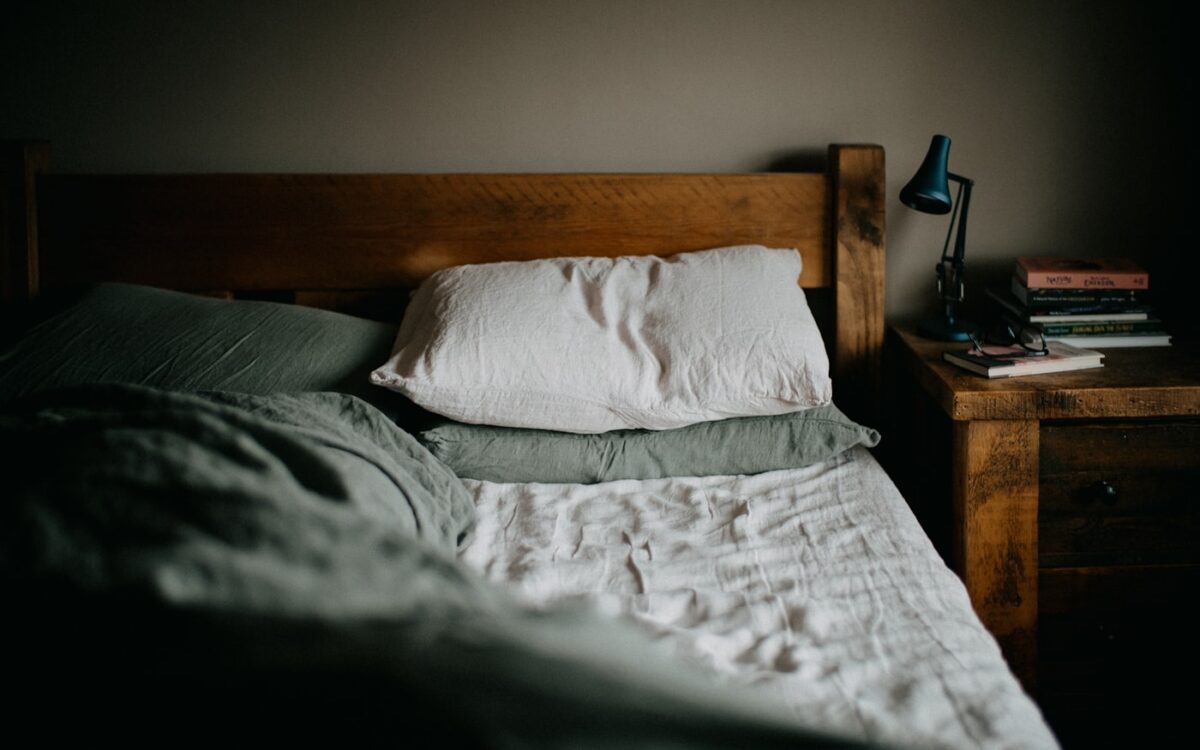
Colour is the easiest feng shui lever to reach, and the one people most often overreach with. Before we sort feng shui bedroom colors by the five elements, hold one principle steady: the bedroom is a room for rest and repair, not stimulation. Whatever the theory suggests, the palette that helps you sleep is the palette that is working. Colour is a finishing layer over the Form-School basics — a bed in the commanding position, clear floors, a solid wall behind the headboard. Get those right first, then let colour tune the room.
Feng shui reads colour as carried element. In the five elements (五行 wǔxíng), each phase owns a family of hues, and those hues either feed, drain, or clash with a space according to the productive and controlling cycles. That is the whole logic beneath “lucky bedroom colours” — no more, no less.
The five elements and their colours
The element-to-colour mapping is fixed. These assignments match the cycles used across our Ba Zi work, so they stay consistent whether you are reading a room or a chart:
Element
Colours
Feeling in a bedroom
Wood (木 mù)
Green, teal, soft brown
Growth, calm vitality, renewal
Fire (火 huǒ)
Red, orange, hot pink, purple
Passion, activity — stimulating
Earth (土 tǔ)
Beige, sand, taupe, terracotta, soft yellow
Stability, grounding, rest
Metal (金 jīn)
White, grey, silver, metallics
Clarity, order, crispness
Water (水 shuǐ)
Black, charcoal, deep blue
Depth, stillness, quiet
The two cycles decide how these interact. The productive cycle runs Wood → Fire → Earth → Metal → Water → Wood: each element feeds the next. The controlling cycle runs Wood → Earth → Water → Fire → Metal → Wood: each element checks another. In practice this means Earth tones drain Fire, Water feeds Wood, and Wood feeds Fire. You are not memorising a chart so much as noticing which way a colour pushes a room — toward stillness or toward activity.
风水 · Feng Shui
Find your lucky directions. Plot your chart free and see your feng shui Kua number and the directions that favour you — computed in your browser.
The most reliable bedroom palette is an Earth base: skin-adjacent neutrals — warm beige, sand, oatmeal, soft taupe, pale terracotta. Earth is the element of stability and grounding, and skin tones read as safe and restful to almost everyone regardless of their personal element. They also sit calmly under low evening light, which is when a bedroom actually does its work.
Build the room in layers. Let the large surfaces — walls, bedding, curtains, rug — carry the quiet Earth base. Then introduce a personal element as accents: cushions, a throw, artwork, a lamp. This keeps the room restful while still tuning it toward what you want. If you do not yet know which element supports you, that is the personalised layer — your Ba Zi (八字 bāzì) chart shows your favourable elements, and you can plot it free with the Ba Zi calculator before choosing accents. The relationships between those elements are set out in our guide to the five elements in Ba Zi.
Colour by Bagua zone
The Bagua (八卦 bāguà) map overlays a home or room with eight zones plus a centre, each governing a life area and each holding a native element. If you want colour to support a particular area of the bedroom, match the accent to the zone’s element rather than fighting it. Schools differ on how to orient the map — the classical/compass Bagua fixes zones to true directions, while the Western/BTB Bagua aligns them to the room’s entrance — so choose one method and stay with it.
Zone
Life area
Element
Supportive accent colours
N
Career / path
Water
Charcoal, deep blue
NE
Knowledge
Earth
Sand, soft yellow
E
Family / health
Wood
Green, teal
SE
Wealth / abundance
Wood
Green, brown
S
Fame / reputation
Fire
A small touch of red only
SW
Love / marriage
Earth
Terracotta, warm beige, soft pink
W
Children / creativity
Metal
White, grey, metallics
NW
Helpful people
Metal
White, silver, grey
The Southwest is the one most people ask about, since it governs love and marriage — an Earth zone, so warm skin tones, terracotta and the softest pink support it, ideally kept in pairs for partnership. That pairing habit and the other core do’s and don’ts sit in our feng shui bedroom rules, and the wider room-by-room picture is in the practical feng shui bedroom guide.
The over-Fire warning
Here is the single most common colour mistake in bedrooms: too much Fire. Red is the reflex “lucky” colour, and it does carry passion — but Fire is stimulating by nature, and a bedroom drenched in red, hot orange or hot pink tends to overstimulate, which works against sleep and, over time, against calm. Couples sometimes reach for red hoping to warm a relationship; a restless room rarely delivers it.
Use Fire as a spark, not a wash. A single cushion, one framed piece, a warm-toned lamp is plenty. If a room already feels overheated, the controlling cycle gives the fix: Water checks Fire (deep blue, charcoal), and Earth drains it (beige, sand). Swap a red wall for a skin-tone base and let a small warm accent carry whatever passion you were after.
How to choose, in order
Work from the general to the personal. First, the restful Earth base — it suits nearly everyone. Second, the Bagua zone, if you want colour to lean toward a particular life area. Third, your own favourable element as accents, which is the layer worth getting right because it is specific to you. Colour cannot fix a bed in a poor position or a cluttered floor, but over a sound layout it tunes the room from neutral to genuinely supportive.
Not sure which element to build around? That answer lives in your chart, not in a colour trend. Plot your Ba Zi free with the calculator, note your favourable elements, and let those guide the accents you bring to a calm, skin-tone room.