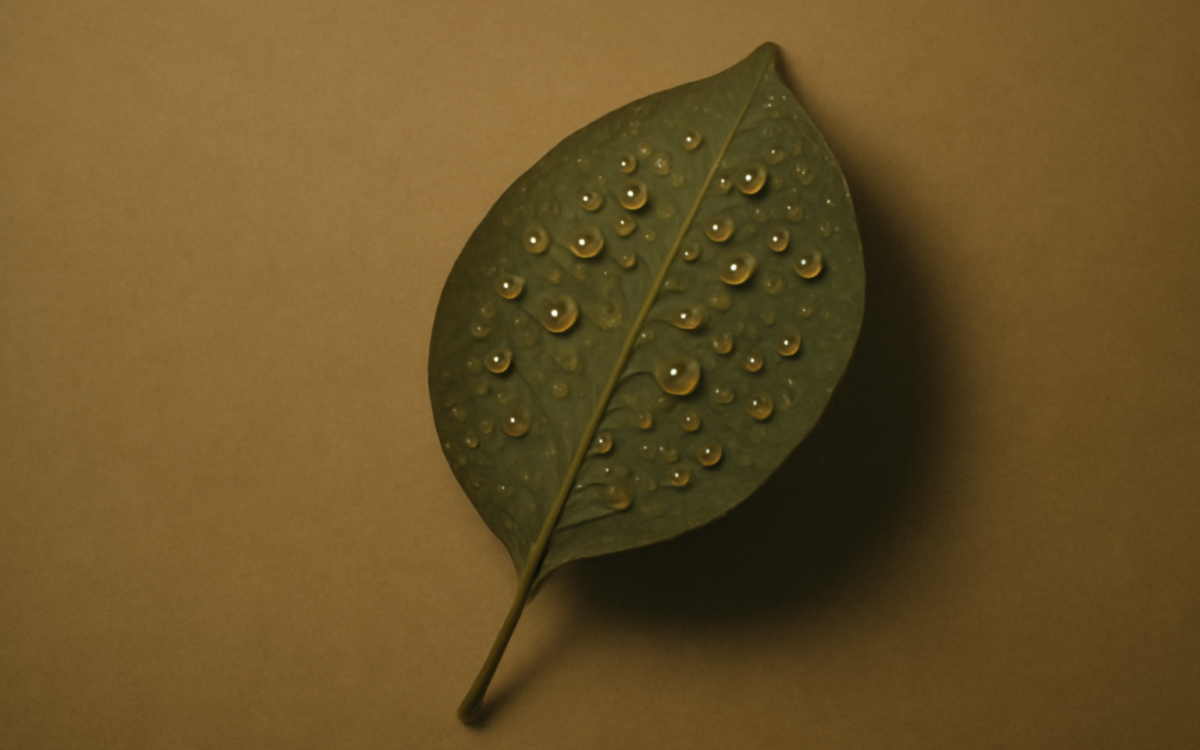
Gui water born in spring is the dew and mist of early morning arriving just as the fields want watering. Guǐ 癸 is Yin Water — not the ocean, but the quiet penetrating moisture that seeps into soil and coaxes seed into shoot. Spring is the Wood season, carried by the branches 寅卯辰 and running roughly from Feb 4 to May 4, from Li Chun (立春 lìchūn) to just before Li Xia (立夏 lìxià). A soft rain born into a season of hungry green is a giver by nature, and that shapes everything about how the chart reads.
One point of accuracy first. Seasons in Ba Zi (八字 bāzì) run on solar terms, not on the calendar month, so a birthday in early February may fall on either side of the boundary. Confirm the true season of your chart with the free Ba Zi calculator before you read yourself as a spring chart.
Resting (休 xiū): the state of gui water born in spring
The seasonal state here is 休 xiū, Resting — your element feeds the season, so energy flows outward. This is the retired-general condition: not weak in the sense of under attack, but drained by giving. For soft water this reading is almost literal. Wood drinks Water. A spring full of sprouting Wood pulls the dew straight out of the air and into growth, and the Gui Day Master is the one supplying it.
The temperament that results is generous and expressive but prone to depletion. Yin Water in an output season pours itself into projects, people and ideas readily, sometimes faster than it can replenish. The gift is fertility — things grow around this person. The risk is running the well dry while everyone else’s garden thrives. In charts we read this pattern often in people who are quietly indispensable to those around them yet privately worn down, giving steadily without a matching supply coming back.
What this season asks of you
Spring is the output season for Water: the season it produces rather than the season that produces it. Practically, a chart in an output state is not asking for more expression — it already has an outlet, the Wood it feeds. What it asks for is replenishment. Look for the resource element, Metal, which produces Water, and for companion Water that keeps the source from emptying. The full drained-chart prescription for this element — what refills, what depletes — is gathered in the guide to favorable elements for Water Day Masters.
If your chart carries that backing, the Resting state becomes productive rather than exhausting: you give, and you are refilled. If it does not, the classic pattern is a talented, giving person who burns through their reserves and wonders why rest never quite restores them. Timing matters too. Water-strong months and years top up the well; Wood-heavy periods deepen the drain. Reading the five elements in Ba Zi (五行 wǔxíng) as a cycle rather than a list makes this legible — our note on the five elements in Ba Zi lays out the producing and controlling relationships.
Where the dew goes: 寅, 卯 and 辰
寅 Yín, the Tiger month
Early spring hides Jiǎ 甲, Bǐng 丙 and Wù 戊. Jiǎ is Gui’s Hurting Officer 伤官 — bold, visible output — and the buried Bǐng is Direct Wealth 正财. A Tiger-month Gui gives dramatically and often sees its giving turn into tangible results, but the drain runs correspondingly fast.
卯 Mǎo, the Rabbit month
Mid-spring hides only Yǐ 乙, Gui’s Eating God 食神. This is the gentlest and most sustainable version of the season’s outflow — soft water feeding soft wood — and the month where the classic “quietly indispensable” pattern shows most clearly.
辰 Chén, the Dragon month
Late spring hides Wù 戊, Yǐ 乙 and Guǐ 癸 — and that final stem matters. 辰 is one of the transitional Earth branches 辰未戌丑, where Earth strengthens at the season’s end, and it is also the classical water storehouse: a Dragon-month Gui carries a root of its own element inside the month branch. The Wù main qi is Direct Officer 正官 pressure, but the buried Guǐ means the late-spring reading is better rooted than the Resting label alone suggests.
The caveats that change everything
Season is only half the strength verdict. It sets the baseline climate, but roots, hidden stems (藏干 cánggān) and the balance of the other pillars finish the judgement. A Gui Day Master born in spring but sitting on a Water branch, or backed by Metal in the month and hour, may read as comfortably supported despite the Resting label. Another with the same season but dry, Wood-heavy pillars leans genuinely thin.
This is why we never call a chart strong or weak from the season alone. The full method weighs seasonal state against rootedness and the company each stem keeps. If you want the reasoning laid out, the guide on strong versus weak Day Master walks through it, and the Gui Water Day Master profile covers the temperament of this stem across all four seasons. For contrast, a Gui chart born into its own Water season reads at the opposite pole — prosperous where the spring chart is giving. The other two quarters sit between those poles: Gui water born in autumn is fed by the Metal months, and Gui water born in summer fights uphill through the Fire season.
The honest way to know where you stand is to confirm both your Day Master and your birth season, since the two together set the whole baseline. Plot your full chart with the Butcher Boy calculator and see whether your spring water is well-fed or quietly running dry before you draw any conclusion from the season alone.