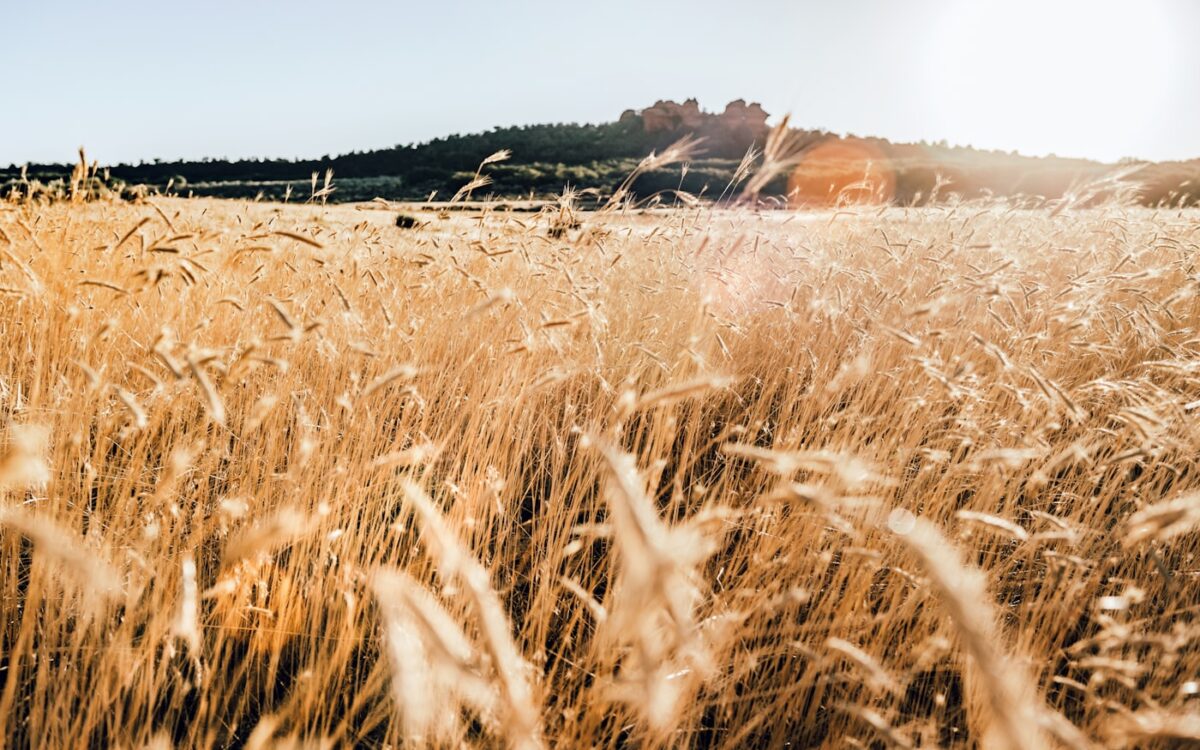
The Ji Wei day pillar (己未 jǐ wèi) sets Yin Earth over the Goat, itself an Earth branch. Jǐ (己 Yin Earth) is garden soil — cultivated, nourishing, unassuming — and Wèi (未 the Goat) is warm, dry summer earth, the branch where this soil finds its own root. This is a broad field of settled ground, deeply the native’s own: abundant, warm and self-supporting. Earth on Earth, it is among the most self-rooted pillars in the sixty, quietly firm rather than showy.
Because the day pillar is your seat in your own chart, Ji Wei describes a person who meets life the way a wide field does — accommodating on the surface, unmovable at the core.
Personality
Jǐ is the cultivating stem — modest, adaptable, nurturing, the soil that helps other things grow. On the Goat, that instinct is anchored in its own ground. The branch’s energy reads as Friend (比肩 bǐjiān) to the Day Master, the companion star, and because the Goat is Jǐ’s home root, it lands as a quiet, durable self-sufficiency.
So this is a mild but firmly grounded pillar. Ji Wei people tend to be warm, patient and inclusive, the sort who make room for everyone, yet they keep their own counsel and hold their ground when it matters — accommodating without being a pushover. Beneath the field, the Goat stores an Indirect Resource and a hidden Seven Killings, adding independent, unorthodox thinking and a real capacity for discipline and endurance. Read Ji Wei as gentle strength: generous and settled on the surface, with a resilient, self-directed spine underneath.
The spouse palace
In Ba Zi (八字 bāzì) the day branch is the spouse palace, the seat of one’s partner. The Goat holds three hidden stems, mixing companionship, support and a note of force.
| Hidden stem | Ten God (relative to Jǐ) |
|---|---|
| Jǐ 己 (Yin Earth) | Friend (比肩 bǐjiān) |
| Dīng 丁 (Yin Fire) | Indirect Resource (偏印 piānyìn) |
| Yǐ 乙 (Yin Wood) | Seven Killings (七杀 qīshā) |
For a Jǐ woman, the officer family is the husband star, and the Seven Killings stored here classically points to a strong, capable, forceful partner — someone with real character. Read without alarm, Seven Killings simply describes intensity; the marriage works through mutual respect rather than either side backing down. The Friend leading the seat means the native’s own self-sufficiency is strong, so the practical note is to keep clear couple-space. The Indirect Resource adds a thoughtful, supportive base. Taken together, this is a partnership of two grounded, strong-willed people, best when their firmness faces life together rather than each other. How much weight the seat carries against the visible spouse star is a method question — our spouse palace guide walks through it.
What reaches the Goat
Because the Goat is a storehouse branch, its relations matter more than most. In the fixed lists, 未 clashes with 丑 (丑↔未) — the meeting of the two Earth vaults — so an Ox among the natal branches, or arriving in a luck pillar or year, sends instability signals through this palace and tends to bring its stored stems into open play. 未 combines with 午 (午+未→Fire/Earth), a binding influence that warms the field further, and with Pig and Rabbit it completes the Wood frame (亥卯未→Wood frame), which enlarges the hidden Seven Killings into a live force. None of these arrivals is a verdict; each is a season in which the settled ground is asked to move.
Reading Ji Wei step by step
Work this pillar in order. First, strength: a Day Master on its own root starts firm, so check whether the month piles on more Earth and Fire — which risks density — or brings the Wood and Water that give the field work and moisture. Second, treat the three hidden stems as capacities: self-reliance from the Friend, unorthodox thinking from the Indirect Resource, quiet discipline from the Killings — then see which is echoed by a visible stem elsewhere, since the echoed one usually leads. Third, note where 丑, 午, 亥 and 卯 sit in the chart, because those four branches are the levers on this seat. The stem-by-stem reference for the middle step is the Ten Gods table for the Ji Earth Day Master.
Na Yin
The melodic element (纳音 nàyīn) of Ji Wei is 天上火 Tiānshàng Huǒ, Celestial Fire — the fire of the sun and high heavens. For a warm, well-rooted field it is a fitting note: the great light that ripens what the ground grows. Take it as poetic flavour, secondary to the Earth-on-Earth mechanics that give the pillar its firmness.
In a full chart
No pillar reads in isolation. On its own, Ji Wei looks warm and self-contained, but the surrounding chart decides whether that self-rooted earth is fertile or merely dense and dry, in need of Water to soften and Wood to open it. Whether this pillar reads as generous or stuck comes down to strength, so begin with a strong versus weak reading, then read the stem more fully in the Ji Earth Day Master profile. The neighbouring Wu Wu day pillar shares this Celestial Fire melody on the broader Yang Earth, a clear contrast between the field and the mountain.
Within the Jǐ family, the sharpest comparisons are Ji Chou, the cold storehouse that clashes this warm one — reading the pair together shows exactly what the 丑↔未 axis means — and Ji Mao, where the Killings that hides quietly here stands alone and undiluted in the seat.
Curious whether Ji Wei is your day pillar? Confirm it in a moment — plot your chart free with the Ba Zi calculator and read your day stem and branch straight off the chart.