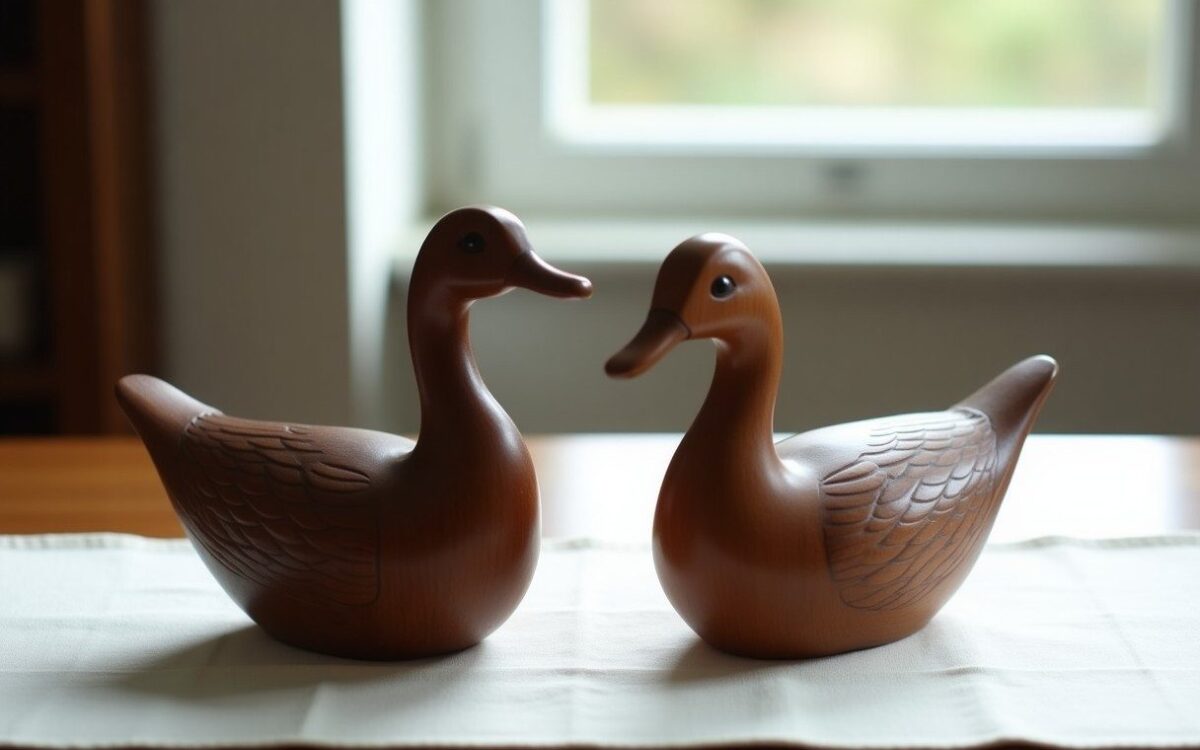
Mandarin ducks, 鸳鸯 (yuānyāng), are the oldest image of a devoted couple in Chinese culture. In mandarin ducks feng shui the figure is always a pair: two birds side by side, usually carved in jade or wood, or painted together on a scroll. They are a quiet symbol, and like every symbol in a home, they say more about the people who placed them than about any force in the room.
This page covers where the tradition comes from, the placement customs most households follow, and how a Ba Zi practitioner reads the question the ducks are really asking.
Why mandarin ducks stand for a devoted couple
The tradition holds that mandarin ducks pair for life, and that if one is lost the other does not take a new mate. The zoology is more complicated than the proverb, but the image stuck. For centuries the pair has been embroidered on wedding linens, pillowcases and quilts, and the two characters 鸳 and 鸯 are written together as a single word for a couple who belong to each other.
That is the root of the custom. A pair of ducks in a home is a wish, stated in objects: that the relationship should be lasting, companionable and mutual. It is the same family of symbol as the red thread of 月老 (Yuè Lǎo), the old man under the moon, and it carries the same weight. It is a picture of what you hope for, not a mechanism.
Mandarin ducks feng shui: placement customs
The placement lore is short, and most of it is consistent across households.
- Always two. The ducks are a pair, never a single bird. A lone duck is read as the opposite of the wish.
- The Southwest. In Ba Gua placement the Southwest belongs to the trigram 坤 (kūn), Earth, the receptive and nurturing trigram, and it is commonly treated as the relationship sector. Many people set the ducks there, in the living room or in the bedroom.
- The bedroom. The other common choice is the bedroom itself, on a dresser or side table, since this is the room the couple shares.
- Facing each other or side by side. The pair is usually set close together, facing one another or looking the same way. Ducks turned away from each other defeat the image.
Schools differ on how the Southwest is found. Some lay a Ba Gua grid over the floor plan from the main door; compass-based schools take the actual Southwest from a reading at the centre of the home. Neither is wrong as a household custom, but they will often point to different corners. The broader principles of a calm sleeping space are on the feng shui bedroom page.
What the ducks cannot tell you
The classic mistake is to treat a pair of ducks as a remedy: a single person placing them to bring a partner, or a strained couple placing them to fix what is strained. Nothing in the tradition supports that reading, and a practitioner who sells it that way is selling, not practising. The ducks express an intention. Whether the intention is met depends on two people and the choices they make.
There is still something honest in the custom. Choosing to put a pair in the shared room is a small statement that the relationship deserves attention. If that is the spirit in which the ducks sit on the dresser, they have done their work.
What Ba Zi reads instead
The pair says something about how you see the relationship. The two charts say more. In Ba Zi (八字 bāzì), the questions people bring to mandarin ducks are read from structure, not ornaments.
The first place we look is the spouse palace, the day branch, which describes the kind of partnership a person settles into and how it feels from the inside; the spouse palace page explains it in full. Between two people, we compare the day masters, the element balance each brings, and how the two day branches meet: in combination, in clash, or in neither. That comparison is set out on the Ba Zi marriage compatibility page.
The zodiac animal is a much rougher layer, since it comes from the year pillar alone. It is still the version most families know, and the Chinese zodiac compatibility chart shows the traditional pairings with that limit stated plainly. For couples who are already planning, timing is the other practical question, and the auspicious wedding dates 2027 page covers how a date is chosen.
Mandarin ducks among other household symbols
Mandarin ducks belong to a small group of objects whose meaning is about people rather than wealth. Most feng shui objects in Singapore homes point at money: the three-legged toad, the coin strings, the fish tank. The ducks are the exception, and they are worth keeping in that register. If you are curious about the wealth symbols, the money frog page covers the most familiar of them in the same plain way.
A few practical notes. Choose a pair you actually like to look at, because an object you resent on the shelf says something too. Keep them clean and unbroken. And if one partner finds them sentimental or out of place, the relationship is better served by that conversation than by the ducks.
Read the two charts together
If the question behind the ducks is a real one, about a partner, a marriage or a decision you are weighing, the charts are where to look. A reading is one hour with both charts on the table: spouse palaces, element balance, how the day branches meet and what the coming luck pillars bring to each of you, followed by a written summary. No fear-selling, no remedies to purchase. Book a session through Butcher Boy readings.