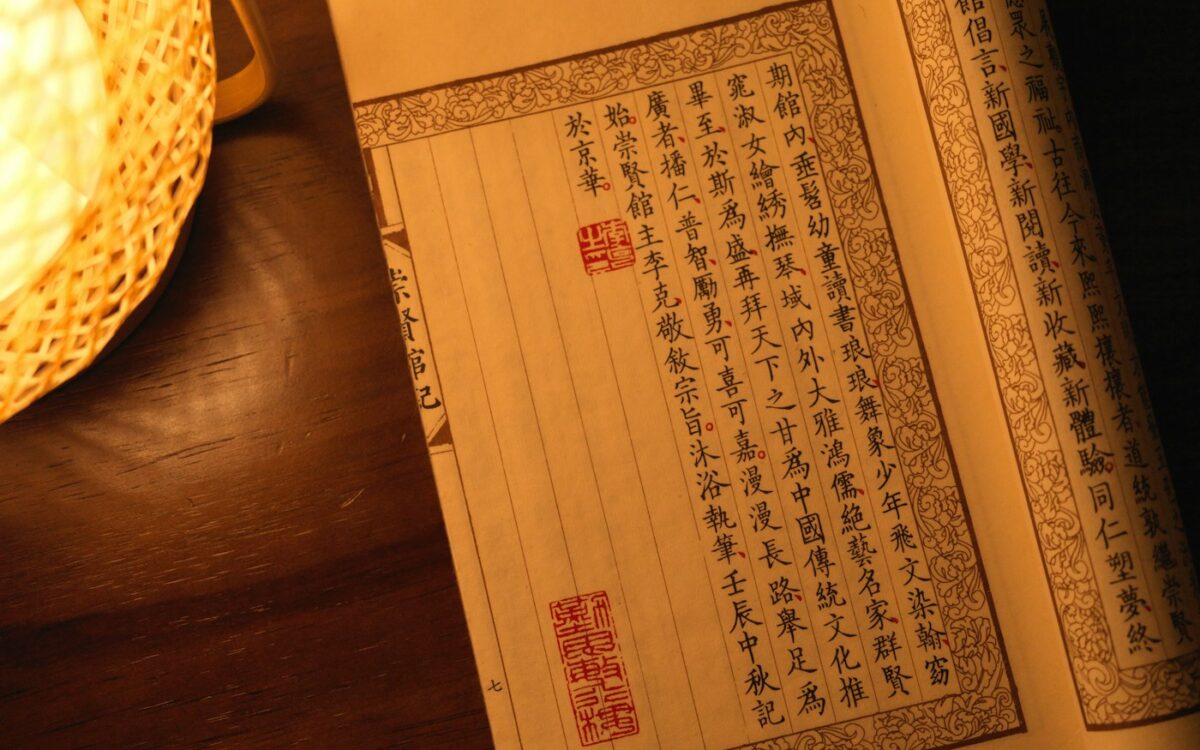
The tong shu is the Chinese almanac: a year-long book that gives every day its pillar, its officer and a long list of what the day suits and what it does not. This page explains what the book is, which of its layers this site computes, and how the most widely used layer, the 12 day officers, actually works.
Tong shu, tong sheng: one book, two names
The formal name is 通书 (tōngshū), roughly “the book that connects everything”. In Cantonese and in everyday Singapore usage it is usually called 通胜 (tōngshèng). The swap is deliberate: 书 shū sounds like 输 (shū), “to lose”, and nobody wants a book of losing on the shelf at New Year. 胜 means “to win”. Same book, kinder name.
Either way, the tong shu runs on the calendar explained on our Chinese calendar hub.
What a full almanac contains
Open a printed tong shu and each day carries several layers at once. Named at a high level, these include:
- the date in both the lunar and the solar calendar, with the day pillar (日柱 rìzhù) from the sixty-day cycle;
- the day officer, one of the 12 officers described below;
- the animal the day clashes with;
- lists of activities the day suits (宜 yí) and activities to avoid (忌 jì);
- further layers such as deity directions and the many named stars that traditional almanac makers track.
We compute the day pillar, the officer and the clash animal. Deity directions and the star layers are real parts of the tradition, but this site does not calculate them, so we do not publish them. If you want a day’s entry the way we compute it, the guide to reading the Chinese calendar today walks through each line.
The 12 day officers (建除十二神)
The 12 officers, 建除十二神 (jiànchú shí’èr shén), are named after the first two in the sequence: 建 Establish and 除 Remove. They are the backbone of most tong shu entries, and they come from one rule.
The officer index is (day branch minus month branch) mod 12. In plain terms, 建 falls on the day whose earthly branch is the same as the month’s branch, and the other eleven follow in order. The month here is the solar-term month, which changes at each of the 12 节 (jié), not on the lunar first day. If the branches themselves are new to you, start with heavenly stems and earthly branches, and see the 24 solar terms for where the months turn.
This is the table our almanac engine uses, unchanged:
| # | officer | pinyin | English | favourable | avoid |
|---|---|---|---|---|---|
| 1 | 建 | Jiàn | Establish | starting ventures, taking office, planning | ground-breaking, burial |
| 2 | 除 | Chú | Remove | cleaning house, ending bad habits, medical treatment | weddings, signing contracts |
| 3 | 满 | Mǎn | Full | celebrations, opening stores, gatherings | funerals, lawsuits |
| 4 | 平 | Píng | Balance | routine work, repairs, levelling ground | major launches, risky moves |
| 5 | 定 | Dìng | Stable | agreements, engagements, setting foundations | travel, litigation |
| 6 | 执 | Zhí | Initiate | hiring, catching what escapes, building | moving house, opening businesses |
| 7 | 破 | Pò | Destruction | demolition, decisive breaks | almost everything else — a classical caution day |
| 8 | 危 | Wēi | Danger | stillness, prayer, careful maintenance | heights, water, risky undertakings |
| 9 | 成 | Chéng | Success | openings, weddings, signing, moving in | lawsuits, quarrels |
| 10 | 收 | Shōu | Receive | collecting debts, harvesting, storing | funerals, starting journeys |
| 11 | 开 | Kāi | Open | grand openings, education, new relationships | burial, ground-breaking |
| 12 | 闭 | Bì | Close | closing accounts, rest, sealing agreements | openings, taking office |
How the officers are used in practice
The cycle opens with 建 Establish and closes with 闭 Close; between them it moves through the life of any undertaking.
Beginnings. 建 suits planning and taking office; 开 Open suits grand openings, education and new relationships. Both list burial and ground-breaking among things to avoid, so a family would not choose either for disturbing the earth.
Commitments. 定 Stable suits agreements and engagements; 成 Success suits openings, weddings, signing and moving in. Note that 除 Remove, despite its useful side for cleaning house and medical treatment, lists weddings and signing contracts under avoid.
Gathering and maintaining. 满 Full favours celebrations, 收 Receive favours collecting debts and storing, and 平 Balance favours routine work over major launches.
Caution. 破 Destruction is the day for demolition and decisive breaks, and is a classical caution day for almost everything else. 危 Danger favours stillness and careful maintenance and steers away from heights, water and risky undertakings. These are days for quiet work, not days to fear. The 破 here is simply the seventh officer; it is not a separate year-level affliction.
A worked derivation
Take 2027-02-04. Li Chun (立春 lìchūn), the start of spring and the first 节 of the year, arrives at 09:45 Singapore time, and from that moment the solar month is 壬寅 (Rén Yín), a 寅 (Tiger) month. Our engine computes the day at 12:00, so the 壬寅 month applies. The day pillar is 甲寅 (Jiǎ Yín, Yang Wood over Wood Tiger). The day branch is 寅 and the month branch is 寅, so the difference is zero: the officer is 建 Establish. The day clashes with the Monkey (申), the branch six places from 寅.
The same rule gives every other entry. On 2026-10-12 the day is 己未 (Jǐ Wèi) in a 戊戌 (Wù Xū) month; counting from 戌 to 未 gives the tenth officer, 收 Receive, and the day clashes with the Ox (丑). On 2026-12-22 the day is 庚午 (Gēng Wǔ) in a 庚子 (Gēng Zǐ) month; 子 to 午 is six steps on, the seventh officer, 破 Destruction, and the clash is the Rat (子). And on 2027-09-15 a 丁酉 (Dīng Yǒu) day sits in a 己酉 (Jǐ Yǒu) month, branch matching branch, so 建 comes round again.
The lunar date plays no part: 2027-02-04 is still 腊月廿八 (làyuè niànbā) in the old lunar year, yet its officer counts from the new solar month. The tong shu and Ba Zi share that backbone.
The almanac also marks the deities’ festival days, such as those of Guan Yin and of the earth god, known in Singapore as Tua Pek Kong.
Frequently asked questions
What is the tong shu?
The tong shu is the Chinese almanac: a year-long book that gives every day its pillar, its officer, the animal it clashes with, and lists of what the day suits (宜 yí) and what to avoid (忌 jì).
Why is the tong shu also called tong sheng?
The formal name is 通书 (tōngshū), but 书 shū sounds like 输 (shū), “to lose”, so in Cantonese and everyday Singapore usage it is called 通胜 (tōngshèng); 胜 means “to win”. Same book, kinder name.
What are the 12 day officers?
The 12 day officers, 建除十二神 (jiànchú shí’èr shén), are a cycle from 建 Establish to 闭 Close, each with activities it favours and avoids. They are the backbone of most tong shu entries.
How is the day officer calculated?
The officer index is (day branch minus month branch) mod 12, so 建 falls on the day whose branch matches the month’s branch and the other eleven follow in order. The month is the solar-term month, which changes at each of the 12 节, not on the lunar first day.
Which day officers are good for weddings?
成 Chéng, Success, lists weddings among its favourable activities, along with openings, signing and moving in. 除 Chú, Remove, lists weddings and signing contracts under avoid, and 破 Pò, Destruction, is a classical caution day for almost everything except demolition and decisive breaks.
Does a good tong shu day suit everyone?
No. An officer describes the day for everyone, not whether it suits you; a 成 day that clashes with your own day branch is a different proposition. The tong shu is the first filter and your chart the second, as set out in how auspicious dates are chosen.
Where the book stops and your chart begins
An officer describes the day for everyone, not whether it suits you. A 成 day that clashes with your own day branch is a different proposition, which is why we treat the tong shu as the first filter and your chart as the second. Our page on how auspicious dates are chosen covers that second step.
To see today’s officer, its favourable and avoid lists, the clash animal and the week ahead, open the free almanac tool, which uses the table above. Then plot your own chart with the free Ba Zi calculator and read the day against your own branches.