The living room is the social heart of a home, and in feng shui (風水 fēng shuǐ) it is where the household’s shared energy gathers. Where the bedroom is private and restorative, the living room is public and active — it hosts guests, conversation, rest, and the everyday flow of people through the house. A good feng shui living room feels welcoming the moment you step in: the seating faces you, the space breathes, and nothing blocks the path. This guide walks through the room the way a practitioner would, leading with the universal Form School (巒頭 luán tóu) principles anyone can apply, then the element and Bagua layer for finer tuning.
Start with the sofa: the commanding position
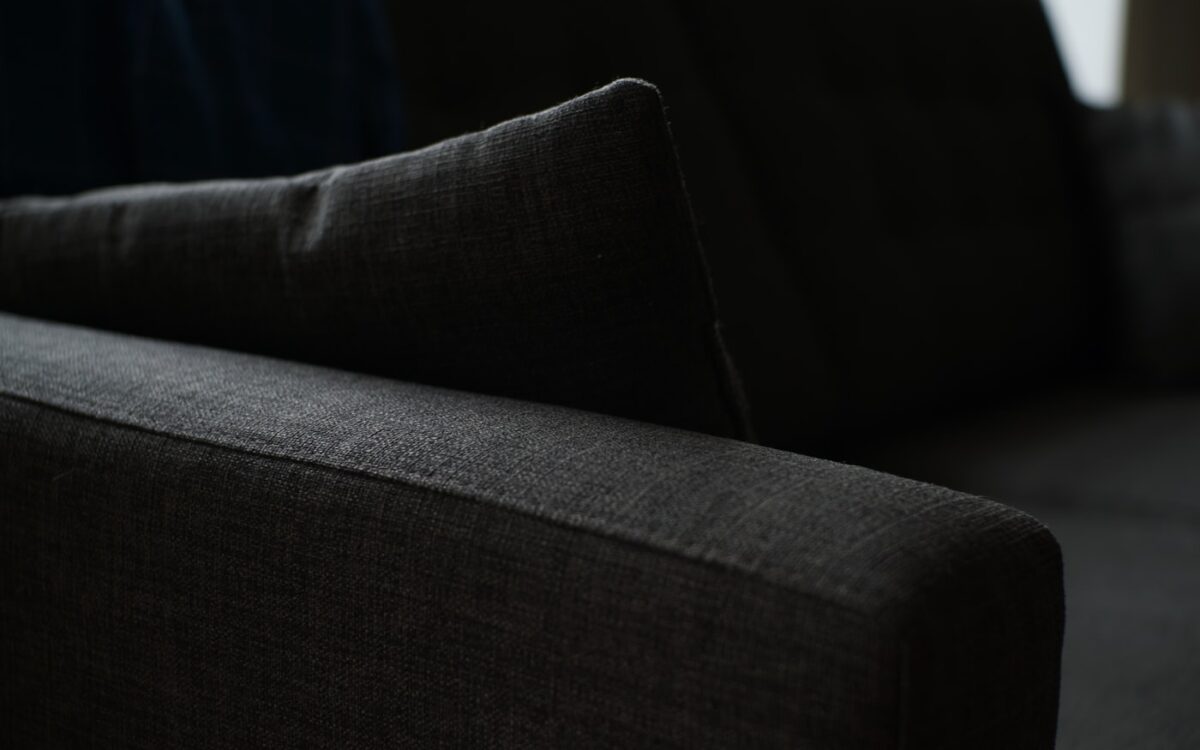
The single most useful principle in any room is the commanding position (命位 mìng wèi), and in the living room it governs the sofa. The main sofa — the seat where you and your family spend the most time — should sit with its back against a solid wall and a clear view of the room’s entrance. You want to see who comes in without being directly in line with the doorway.
The reasoning is practical before it is metaphysical. A solid wall behind you gives support and a sense of security; nobody relaxes fully with their back to an open space or a walkway. Seeing the door means you are never startled, so your nervous system settles. Placed diagonally across from the entrance is ideal — you command the room without sitting in the direct rush of qi (氣 qì) coming through the door.
If your layout forces the sofa to float in the middle of the room with its back to the entrance, anchor it. A console table behind the sofa, a low bookshelf, or even a run of tall plants creates the “wall” the back of the sofa is missing. This is the same logic that governs the bed and the desk — it is worth understanding once and applying everywhere, as we cover in the feng shui bedroom guide for the bed.
风水 · Feng Shui
Find your lucky directions. Plot your chart free and see your feng shui Kua number and the directions that favour you — computed in your browser.
Qi is the vital current, and it behaves a little like air and a little like foot traffic. It should be able to meander gently through the living room, reaching every corner, without either racing through in a straight line or getting stuck. Two problems break this flow, and both are common.
The first is a blocked entry. If you walk into the living room and immediately meet the back of a sofa, a bulky cabinet, or a wall of clutter, the qi stalls at the threshold and so do the people. Keep the area just inside the room open. The second is a straight shot — a door aligned directly with a window or a back door across the room. Qi rushes in and straight out again without nourishing the space. A rug, a coffee table, or a plant placed to interrupt that line slows the current and keeps it in the room.
Clutter deserves its own mention because it is the most reversible feng shui problem there is. Piles of unread mail, tangled cables, and surfaces you can no longer see all create stagnant qi — the room feels heavy and tiring without an obvious reason. You do not need cures or crystals for this; you need a clear coffee table and a home for the remote. Clearing clutter is the highest-leverage change most living rooms can make.
Coffee table, TV, and seating arrangement
Arrange the seating to encourage conversation and connection. Where possible, position sofas and chairs so people partly face one another rather than all lining up to stare at a screen. Chairs pushed to the far edges of the room leave a cold, empty middle; pulling them into a loose grouping around the coffee table draws the room’s energy together.
The coffee table anchors the centre. Rounded or oval tables are gentler on qi flow and safer in a busy room than sharp corners, which practitioners call “poison arrows” (煞氣 shā qì) when they point directly at where someone sits. If your table has hard corners, soften the arrangement so the points are not aimed at the main seat.
The television is the modern living room’s puzzle. It is best not to make the TV the sole focus of the room, since it belongs to the Fire element (火 huǒ) when on and pulls attention outward. Keep it in a media unit rather than dominating the wall, and if it faces the sofa directly across a small room, a little distance and some softening around it help. When off, a large black screen acts like a dull mirror; a cabinet with doors, or simply switching it off rather than leaving it on standby, keeps that surface from flattening the room’s energy. For the full arrangement logic, see our feng shui living room layout walkthrough.
The wealth corner, plants, and mirrors
Beyond Form School, the Bagua map (八卦 bā guà) assigns life areas to zones of a space. The wealth-and-abundance zone sits in the southeast in the classical compass Bagua, governed by the Wood element (木 mù). In the Western or BTB tradition, the wealth corner is instead the far left corner from the room’s entrance. Schools genuinely differ here, so name which you are using rather than mixing them. Either way, this is the corner people mean by the “feng shui wealth corner” — a spot to keep clean, well-lit, and lightly activated. A healthy plant, a small water feature, or something you associate with growth suits it, because Water feeds Wood in the productive cycle (Water → Wood). We go deeper in the dedicated feng shui wealth corner guide.
Plants bring living Wood energy, fresh air, and a sense of vitality to the living room. Choose species with soft, rounded, or upward leaves rather than spiky ones, and keep them genuinely healthy — a dying plant does the opposite of what you want, so tend it or remove it. A single thriving plant in a corner does more than a shelf of struggling ones.
Mirrors are powerful and easy to misuse. A well-placed mirror can double a view of a garden, brighten a dark corner, or visually open a cramped room. The caution is what it reflects: aim it at something pleasant, not at clutter, a sharp corner, or straight out of the front door, where it can bounce arriving qi back outside. Reflecting a dining table or a green view is a classic gentle enhancement.
The personalised layer: your element and Kua
Everything above is Form School — universal, and enough to arrange most living rooms well. The Compass School (理氣 lǐ qì) adds a personalised layer. Your Kua number (本命卦 běn mìng guà), computed from birth year and sex, sorts you into the East or West group and sets your four auspicious directions, which you can favour when choosing which way the main sofa faces. This is deterministic and specific to you, so rather than guess it, find your Kua and let it refine the placement.
Feng shui is Ba Zi’s spatial sibling: where feng shui reads the room, Ba Zi (八字 bāzì) reads the person. The two use the same five-element language, so understanding your own chart’s balance tells you which elements to lean on at home — more Water and Wood, or more Metal and Earth. To see which of the five elements your chart favours, plot your Ba Zi free with the Butcher Boy calculator, and let the room follow the person.