Most Chinese superstitions are easier to understand than they look. Many come from wordplay: an object is avoided because its name sounds like something sad. Others come from funerals, where an everyday action echoes a mourning rite. Here are the ones you are most likely to meet in Singapore, grouped by where they come up, with the reason behind each.
Not every family keeps all of them, and younger people often keep few. The kind approach is to know them, and to follow them around the people who care.
Gifts to avoid
- Clocks. “Giving a clock”, 送钟 (sòng zhōng), sounds the same as 送终, attending someone’s deathbed. A watch is usually fine.
- Umbrellas. Umbrella, 伞 (sǎn), sounds like 散, to break up or scatter.
- Pears, to share. Pear, 梨 (lí), sounds like 离, to part. Sharing a pear, 分梨, sounds like separation, so couples and friends avoid splitting one.
- Knives and scissors. Sharp things suggest cutting a relationship.
- Handkerchiefs. They are associated with tears and funerals.
- A green hat. “Wearing a green hat” means a man’s partner is unfaithful, so never give one as a gift.
- White or black wrapping. These are funeral colours. Red, gold and bright paper are safe.
Numbers
Four, 四, sounds like death, so many buildings skip the fourth floor and people avoid it in phone numbers, car plates and gift amounts. Eight, 八, sounds like prosper and is welcome everywhere. Even numbers suit happy occasions, because good things come in pairs. More is in our guide to feng shui numbers. Reading phone numbers by digit pairs is a separate and much newer idea, examined in I Ching numbers explained. Sound matters in personal names as well, and our guide to Chinese names and how to choose one covers surnames, generation names and character meanings.
At the table
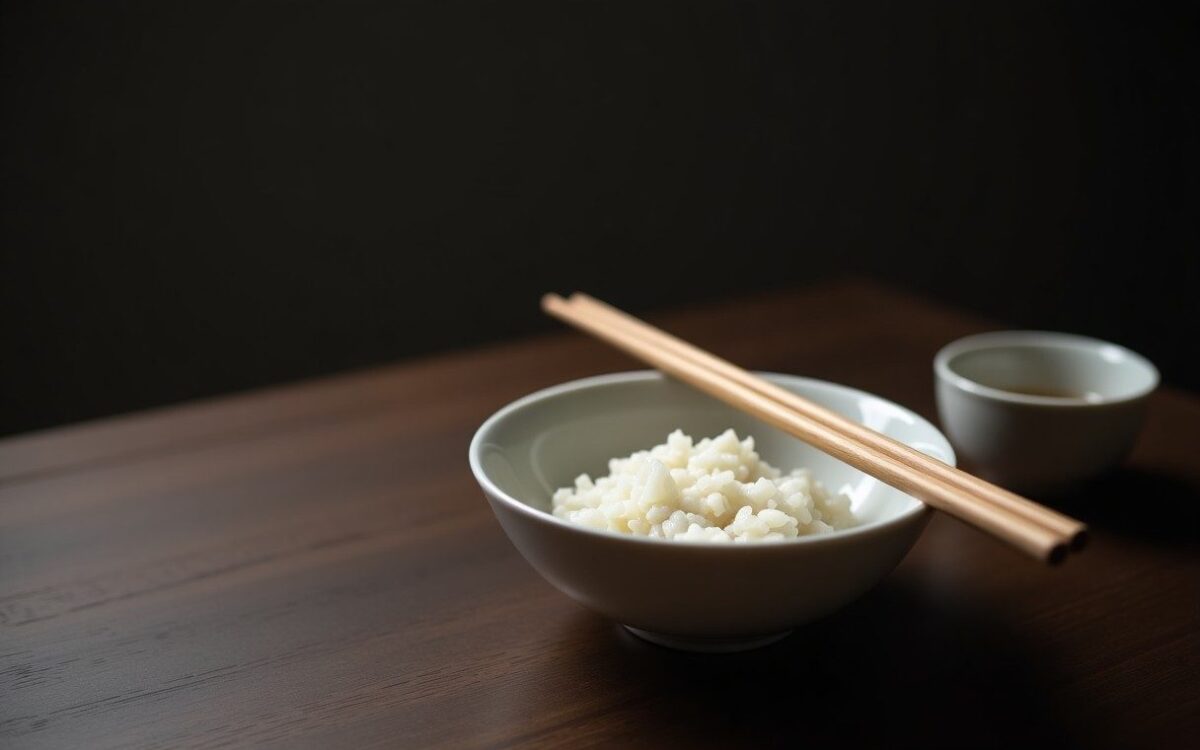
- Never stand chopsticks upright in a bowl of rice. It looks like the incense sticks placed at a funeral altar. Rest them across the bowl or on a chopstick rest.
- Do not flip a whole fish at the table in some fishing communities, where it suggests a capsized boat. Lift the bone out instead.
- Pour for others before yourself, and tap two fingers on the table to say thanks when someone pours for you.
Chinese New Year taboos
- No sweeping on the first day, which would sweep the new luck out of the house. The cleaning is done before.
- No washing hair on the first day. Hair, 发, is the same character as prosper, so it should not be washed away.
- If something breaks, say 岁岁平安, “peace year after year”, because broken, 碎, sounds like year, 岁.
- Avoid lending or borrowing money, quarrelling, crying and unlucky words during the first days.
The full season is in our guides to Chinese New Year traditions and what to wear, including why all-black and all-white outfits are avoided.
The seventh month
During the seventh lunar month, when the gates of the underworld are said to open, many families avoid swimming or whistling at night, stepping on roadside offerings, and holding weddings or moving house. Dates and customs are in our guide to Hungry Ghost Month 2027.
Pregnancy and the home
Folk belief holds that a guardian spirit of the unborn child, 胎神, lives in the home during pregnancy. So families avoid hammering nails, moving heavy furniture or major renovations in the house, and expectant mothers often skip funerals. Many young couples keep these customs out of respect for their parents more than belief.
How seriously to take them
Superstitions are mostly courtesies. Avoiding a clock as a gift costs nothing and spares someone discomfort. None of them decides your luck, and no one should frighten you with them. If you want a grounded view of the years ahead, your own chart is a better guide than any taboo. Our free Ba Zi calculator shows yours in seconds. For where a clock sits well in the home, and more on the gifting custom, see our guide to clock placement in feng shui.