A Chinese wedding is a sequence, not a single day. It starts months before with matching the couple’s birth details and choosing dates, moves through the betrothal gifts and the setting of the bed, and ends days after with the bride’s first visit home. In Singapore most couples keep a selection of these steps, adapted to the family and to modern life, alongside the legal registration at the ROM.
Customs differ between Cantonese, Hokkien, Teochew and Hakka families, and between households. Here is the common sequence, with what each step is for.
The six rites
The classical framework is the three letters and six rites, 三书六礼. The six rites are:
- 纳采 (nà cǎi): the proposal, made through a go-between.
- 问名 (wèn míng): asking for the bride’s name and birth details.
- 纳吉 (nà jí): consulting on the match, traditionally by comparing the couple’s charts.
- 纳征 (nà zhēng): presenting the betrothal gifts.
- 请期 (qǐng qī): setting the wedding date.
- 亲迎 (qīn yíng): the groom fetching the bride.
Modern weddings compress these, but you can still see every one of them in the steps below.
Matching charts and choosing dates
The old step of asking for birth details was so the two charts could be compared. Today some couples still have this done, usually to understand how they work together rather than to decide whether to marry. Our guide to Ba Zi marriage compatibility explains what a reader looks at.
Choosing the dates is the step most Singapore families keep. A wedding has several: the betrothal gifts, the bed-setting and the wedding day itself, sometimes the ROM too. The almanac gives the generally good days, listed for 2027 in our auspicious wedding dates 2027. Date selection then checks those days against both partners’ charts.
Guo da li: the betrothal gifts
Two to four weeks before the wedding, the groom’s family brings gifts to the bride’s home: the bride price in a red packet, wedding pastries, dried seafood, a pair of coconuts and more, always in pairs. The bride’s family returns part of them. The full items list and etiquette are in our guide to guo da li.
Setting the bed
An chuang, 安床 (ān chuáng), is the installing of the marriage bed in the couple’s new room on a chosen date and hour. It is traditionally done by a person of good fortune, someone with living parents, spouse and children, who lays fresh red bedding. Children are often invited to play on the bed as a wish for a family. Until the wedding night, the groom should not sleep on it alone.
The hair combing ceremony
On the night before the wedding, both bride and groom, in their own homes, may go through the hair combing ceremony, 上头 (shàng tóu). A respected elder combs the hair four times, with a blessing for each stroke: for a lasting marriage, for growing old together, for many descendants and for harmony. It marks the passage into adulthood.
Fetching the bride and the door games
On the wedding morning the groom and his groomsmen come to fetch the bride. In Singapore this is the famous gatecrash: the bridesmaids block the door with challenges and the groom pays his way in with red packets and good humour. It is the playful modern form of the sixth rite.
The tea ceremony
The tea ceremony, 敬茶 (jìng chá), is the formal moment when the couple are received into each other’s families. The couple serve tea to the parents and elders, in order of seniority, usually first at the groom’s home and then, on the same day or later, to the bride’s family.
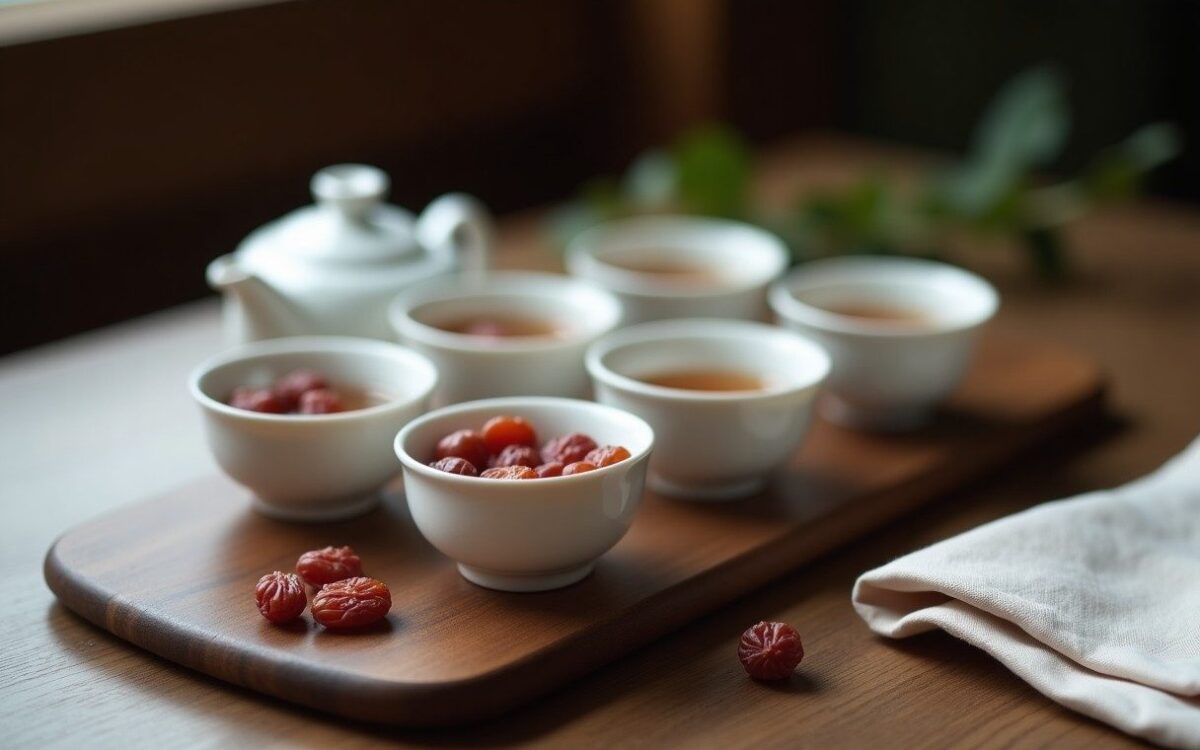
- The tea is often sweetened with red dates and lotus seeds. Together their names sound like 早生贵子, “may you soon have a precious child”.
- The couple hold the cup with both hands and address each elder by their proper kinship title.
- Elders drink, then give the couple red packets or jewellery and a few words of blessing.
A sensible tip from many families: list the elders and their titles in advance, because getting a title right matters more than the tea.
Going as a guest? See how much to give in a wedding ang bao.
The banquet and the return visit
The wedding dinner follows, and on the third day the bride traditionally returns to visit her own family with her husband, 回门 (huí mén), bringing gifts. Many couples now fold this into the first weekend after the wedding.
The red double happiness sign, 囍, that appears on everything from the invitations to the bedroom door is explained among our Chinese good luck symbols.