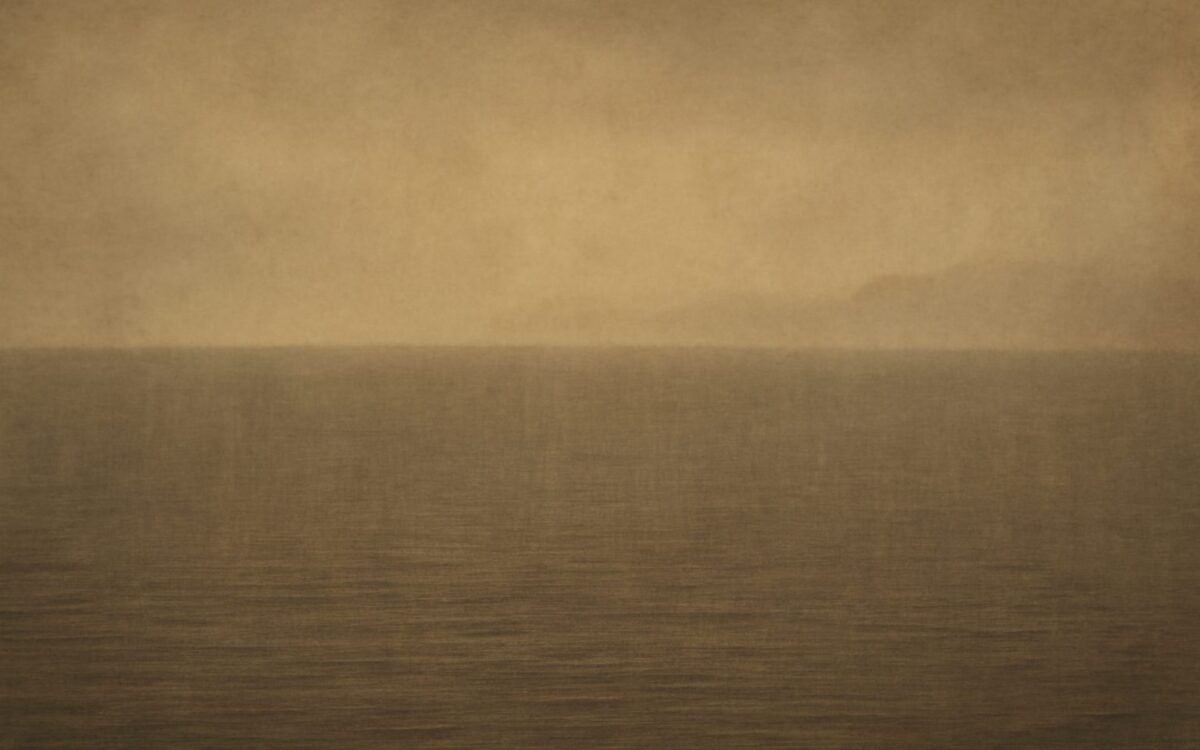
The Gui Hai day pillar (癸亥 guǐ hài) sets Yin Water over the Pig, itself a Water branch. Guǐ (癸 Yin Water) is the softest water — dew, mist, quiet rain — and Hài (亥 the Pig) is broad, deep Water. Water on water, this is rain falling into a great flood, the point where all streams merge and lose their edges. It is the last of the sixty pillars, and it wears that finality well: boundless, deep, hard to fathom.
Because the day pillar is your own seat in the chart, Gui Hai describes a person who meets life gently on the surface while carrying enormous depth and reach underneath — soft water with an ocean behind it.
Personality
Guǐ is the most yielding stem — perceptive, intuitive, adaptable, nourishing, difficult to grasp. On the Pig, that softness is swelled to full volume. The branch’s main energy reads as Rob Wealth (劫财 jiécái) to the Day Master, the companion star, which here lends the quiet rain the force and independence of a much larger body of water.
So this is a deceptively powerful pillar. Gui Hai people tend to be imaginative, deep and wide-ranging — dreamers and wanderers with more inner current than they show, and a real streak of independence beneath the mild manner. The Rob Wealth gives them drive and a certain restlessness, energy that rises and falls like tides. Beneath the surface the Pig also stores a Hurting Officer, adding genuine expressive talent to all that depth. Read Gui Hai as boundless, quietly willful water: gentle to meet, vast underneath, most at peace when it has somewhere wide to flow and something creative to pour into.
The spouse palace
In Ba Zi (八字 bāzì) the day branch is the spouse palace, the seat of one’s partner. The Pig holds two hidden stems, pairing companion energy with the native’s own expression. The full breakdown of those two stems, Ren Water as main qi and Jia Wood beneath, is in the Hai branch hidden stems.
| Hidden stem | Ten God (relative to Guǐ) |
|---|---|
| Rén 壬 (Yang Water) | Rob Wealth (劫财 jiécái) |
| Jiǎ 甲 (Yang Wood) | Hurting Officer (伤官 shāngguān) |
Rob Wealth leading the spouse palace is the note the classics ask you to read carefully rather than fearfully. It describes a marriage seat filled with companion energy — two independent people who both need room — and it asks that finances and personal space be kept clearly agreed. The Hurting Officer alongside adds expressiveness; channelled into creative outlets, it keeps a relationship alive rather than pressuring it. Schools differ on how heavily to weight Rob Wealth here, but the practical reading is steady: this is a partnership of equals that thrives on space, honesty about money, and a shared creative life, and does not do well when either current tries to dam the other.
Neither classical partner star occupies this seat — no Wealth star for a man’s chart, no Officer star for a woman’s — so the partner’s own character is read from wherever that star actually sits, while this palace describes the marriage’s tidal, independent climate. The two-step method is laid out in our guide to the spouse palace.
The Pig’s seasons
Hài is clashed by Sì 巳 (the Snake) in the Six Clashes (六冲 liùchōng), so Snake years are when this vast, quiet seat is stirred — classically the periods when travel, money and partnership matters all seem to move at once for a Gui Hai native. Hài combines with Yín 寅 (the Tiger) toward Wood in the Six Combinations (六合 liùhé), and joins Mǎo 卯 and Wèi 未 in the Wood frame (三合 sānhé). For this pillar those Wood movements are the useful ones: they swell the Hurting Officer hidden in the seat, giving the flood a channel and the dreamer a craft. Tiger, Rabbit and Goat years tend to be when Gui Hai’s depth finally finds its outlet.
Na Yin
The melodic element (纳音 nàyīn) of Gui Hai is 大海水 Dàhǎi Shuǐ, Ocean Water — the widest and deepest water of all. For the final pillar of the sixty, a picture of rain returning to the sea, it could hardly be more apt: all that soft water arriving at something vast and complete. Take it as poetic flavour, secondary to the Water-on-Water mechanics that actually run the pillar.
In a full chart
A single pillar is only a sketch. Read alone, Gui Hai looks deep and strong, and often it is — but the surrounding pillars decide whether that flood is generous power or a boundlessness that needs Earth to bank it and Wood to give it useful direction. This is a chart where judging strength changes every recommendation, so begin with a strong versus weak reading, then read the stem more fully in the Gui Water Day Master profile; the full stem-by-stem map is on the ten gods of the Gui Water Day Master page. The neighbouring Ren Xu day pillar shares this Ocean Water melody on the forceful Yang Water, a clear contrast in how the two Waters carry the sea.
Two of Guǐ’s own siblings complete the study: the Gui Si day pillar sits on the Snake that clashes this Pig — soft water over bright Fire and Wealth, the worldly mirror of this inward sea — and the Gui Mao day pillar shows the expressive Wood hidden here standing alone as a clean Eating God seat.
Questions about Gui Hai
Is Gui Hai strong?
Rooted in its own element, yes — one of Yin Water’s deepest placements. Whether that depth is an asset still depends on the month and on whether the chart offers Earth banks and Wood channels.
What does this pillar mean for marriage?
A partnership of two independent currents. It flourishes with agreed space and transparent finances, and struggles when either partner tries to contain the other. The creative life shared by a couple is this seat’s best glue.
Is being the last pillar of the sixty significant?
Symbolically, the cycle completes here — rain returning to the sea — and the classics enjoy the poetry of it. Analytically, Gui Hai is read like any other pillar: by its elements, its hidden stems and the chart around it.
Wondering whether Gui Hai is your own day pillar? Confirm it in a moment — plot your chart free with the Ba Zi calculator and read your day stem and branch straight off the chart.