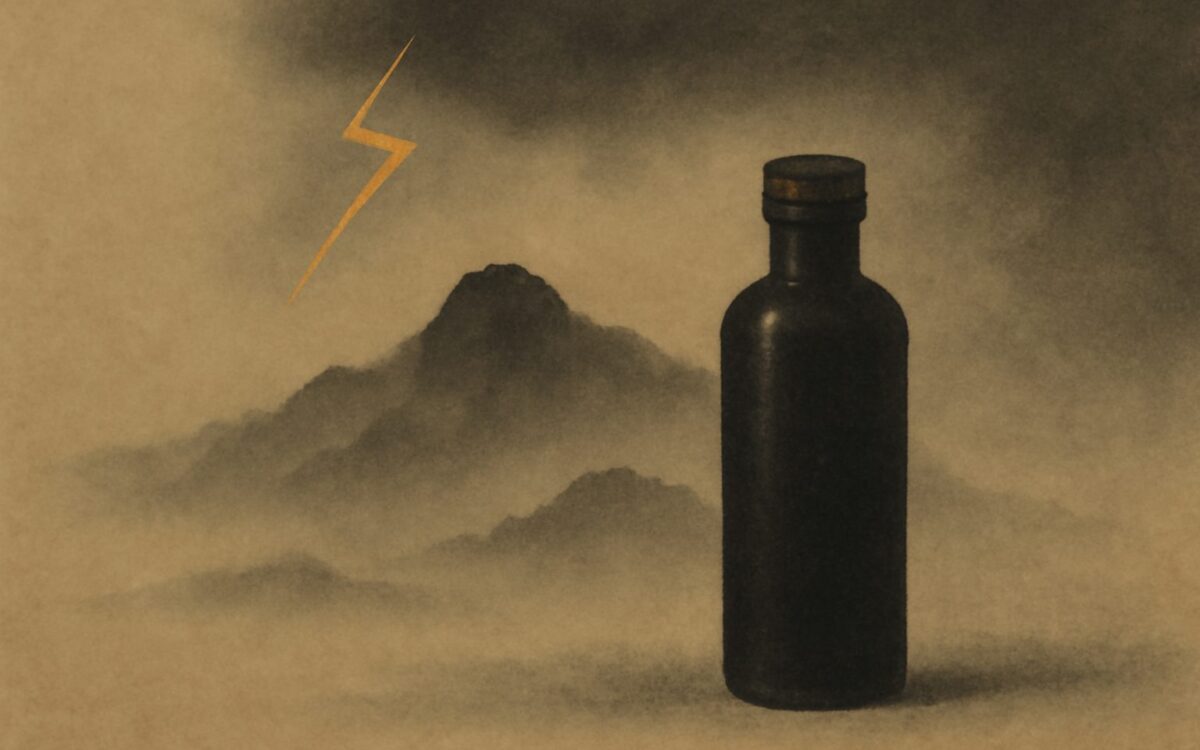
Hexagram 51, 震 (zhèn), is usually read as The Arousing — the shock of thunder. It is one of the eight hexagrams built by doubling a single trigram: here, Thunder (震 zhèn, Zhen) sits over Thunder. Both the upper and lower trigrams are Zhen, the arousing, whose element is Wood and whose motion is sudden and upward. Two claps of thunder stacked one above the other picture a shock that arrives, and then arrives again — a jolt that rolls through a situation rather than a single isolated bang.
When a trigram doubles, its quality is intensified and made the whole theme of the reading. In hexagram 51, that quality is movement that startles. The single yang line at the base of each Zhen trigram is the energy pushing up from below, breaking the surface without warning. The picture is not disaster; it is the moment the ground moves and everyone looks up.
The two trigrams and what they picture
Zhen (震) is the eldest son in the family of trigrams, the first stirring of active force after stillness. Its images are thunder, spring, and the shoot that cracks the seed. Placed over itself, the hexagram gives you shock following shock: the first tremor tests you, the second shows whether the first taught you anything. Because the element is Wood, this is generative energy — thunder here is the sound of things starting to grow, not merely of things being struck. The reading is about how a person holds themselves when the settled order is suddenly disturbed.
易经 · Book of Changes
Cast your own hexagram. Six throws build your hexagram and any changing lines, each linked to a plain reading. Free, in your browser.
The Judgment, in plain voice
The overall counsel of hexagram 51 is steadiness under shock. The classical text pictures a person who, when the thunder comes and others are thrown into fright, does not spill the ritual wine — the ceremonial spoon and chalice stay in a composed hand. The lesson paraphrased: a sudden alarm can move through you without moving you off your feet. Fear that arrives and is met with a calm center becomes, afterward, a kind of clarity — the classical phrasing even lets the shock give way to laughter and talk once it has passed.
Read as tendency, not verdict, the Judgment says that shocks in this configuration are survivable and even useful. What matters is not avoiding the tremor but keeping the inner cup level while it passes. The person who steadies themselves through the first shock is the one still standing, and still holding what matters, when the noise dies down.
The Image and its lesson
The Image of thunder repeated is the natural picture at the heart of this hexagram: rolling, doubled thunder. The counsel drawn from it is that the composed person uses such moments to look inward and set their life in order — fear and trembling become the occasion for self-examination rather than panic. When the sky shakes, the wise response is to check one’s own conduct, not to run.
The lesson is practical. A shock exposes what was loosely held: unfinished business, shaky commitments, a plan resting on assumptions. Rather than treating the jolt as an interruption, the Image suggests treating it as an audit. Thunder passes quickly; the reordering it prompts can last.
Practical guidance
In work, hexagram 51 tends to mark news that lands abruptly — a reorganisation, a market move, a decision made above your head. The counsel is to absorb the first impact before reacting, and to let the shock reveal which parts of your plan were solid and which were only convenient. People who keep their composure in the opening minutes usually shape what happens next.
In relationships, the arousing points to a jolt that clears the air: a hard conversation, an outburst that names what had been unspoken. Handled without adding a second, careless shock of your own, such a moment can reset a bond on honest ground. The tendency is toward release followed by relief, provided the release is not turned into a weapon.
On timing, Zhen doubled favours readiness over prediction. You cannot schedule thunder, but you can keep the cup steady so that when it comes you are not the one who spills. Prepare, stay centered, and expect the situation to move suddenly rather than by slow degrees.
Changing lines and how it shifts
The moving lines of hexagram 51 mark where the shock is active and where it is tending. When a line changes, the upper or lower Thunder becomes a different trigram, and the reading moves toward a neighbour — for instance, stillness settling in after the tremor points toward its paired opposite, 艮 (gèn), Keeping Still, the mountain. That pairing is the whole rhythm of the two hexagrams: thunder that shakes and mountain that holds. A cast with changing lines is telling you which phase you are in — the moment of the jolt, or the stillness on the far side of it. Read each moving line as the specific edge where movement is either arriving or subsiding, and let the resulting hexagram name where the situation is headed.
If you want to see how this arousing, thunder energy expresses in your own chart, the same trigrams and five elements sit underneath the Four Pillars — plot your Ba Zi free with the calculator and read where your Wood and movement fall. To place hexagram 51 in the wider system, visit the I Ching hub, browse the full set on the 64-hexagram overview, or step across to its still counterpart, Hexagram 52, 艮 Gèn.
Read in sequence · Previous: Hexagram 50, 鼎 Dǐng (The Cauldron) · Next: Hexagram 52, 艮 Gèn (Keeping Still)