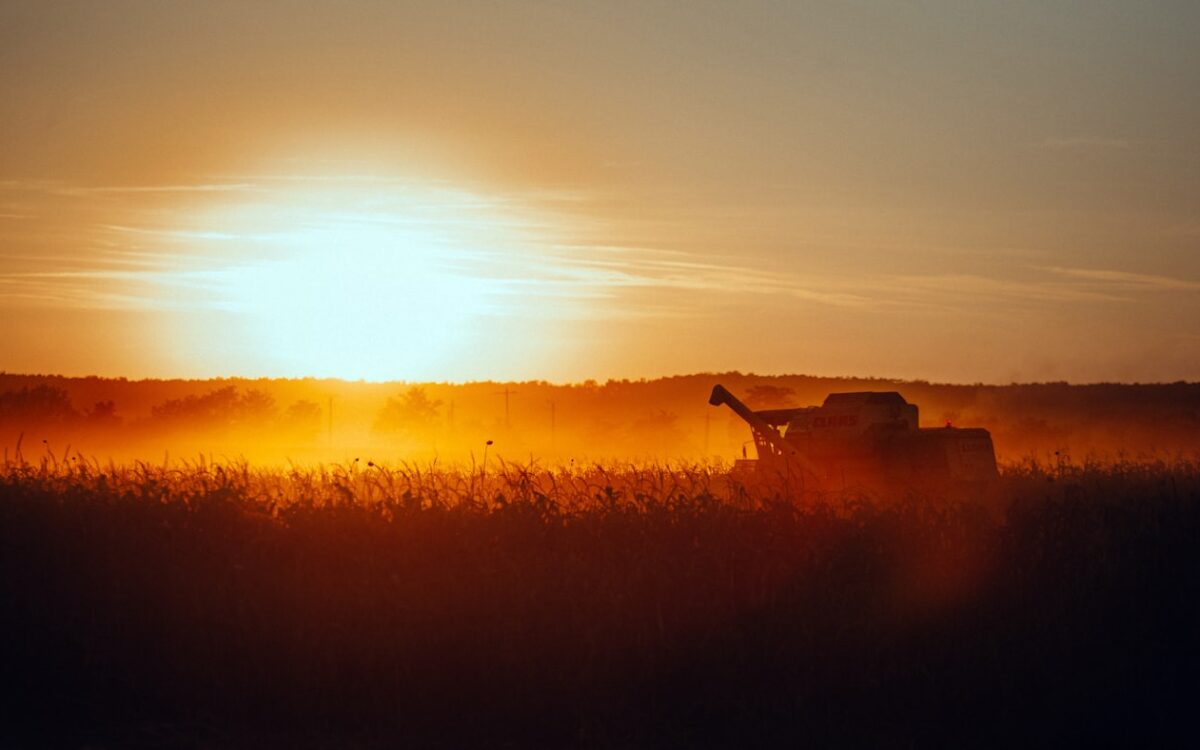
To be ji earth born in autumn is to be the field after the harvest — soft, giving soil that has spent the season producing. Jǐ 己 (Yin Earth) is cultivable garden loam rather than the standing mountain, low-key and nurturing by nature, and autumn is the season it feeds. Autumn is the Metal season, carried by the branches 申酉戌 and running roughly from Aug 7 to Nov 6 in the solar calendar, from Li Qiu (立秋 lìqiū) to just before Li Dong (立冬 lìdōng).
Those solar-term boundaries, not the calendar month, define your season in Ba Zi (八字 bāzì). A birthday in early August or early November can fall on either side of a cutoff, so if you were born close to one, confirm your true month pillar with the free chart calculator before reading strength into it.
Resting (休 xiū): Ji Earth born in autumn as the retired general
In the classical five-phase table, Earth in autumn sits in the state 休 (xiū), Resting. Earth produces Metal, so your element is the one giving energy out to the season — the soil pushing its minerals up into the ripening Metal. It is a mild drain rather than a defeat, often called the retired-general state: the strength was real and has been spent, and now the Day Master coasts on what remains. For soft Ji loam this reads as the tilled field in autumn, still fertile but visibly worked, having handed its substance over to the harvest.
Read this as a middle baseline that leans light. Ji Earth born in autumn is not under attack the way it would be in a controlling season; it is simply pouring itself out. The person may be productive and generous, good at making things happen for others, but at some cost to their own reserves. The soft-soil reading matters here: where hard Wu 戊 Earth loses little by yielding some ore, giving loam that keeps giving can quietly deplete itself if nothing replenishes it.
What this season asks of you
Autumn is the output season for Earth: Metal is the element Earth produces, so the seasonal energy flows outward as expression, creativity and results. A Resting Day Master that is already spending itself usually needs replenishing rather than more outlets. The classic supports are Fire (which produces Earth, restoring the soil that has been giving) and companion Earth to firm up the ground. These let ji earth born in autumn keep producing without hollowing out. The full replenish-versus-spend logic for soil charts is collected in favorable elements for Earth Day Masters.
Watch the balance of output. When the chart is heavy with Metal and the Day Master is lightly rooted, the drain becomes real and the person can feel used up, always delivering and rarely restored. When Fire and helpful Earth are present, the same output turns sustainable and even brilliant, because there is fuel behind the giving. This is the practical difference timing and allies make in a weaker-leaning season, and it maps directly onto the producing and controlling cycles set out in our five elements in Ba Zi guide.
What the harvest takes, month by month
申 Shēn, the Monkey month
Early autumn hides Gēng 庚, Rén 壬 and Wù 戊. The Gēng is Ji’s Hurting Officer 伤官 — bold, visible output — and the buried Rén is Direct Wealth 正财, so the giving often converts into tangible result. The Wù companion underneath keeps the ground from thinning too fast. This is the busiest month of the soil’s year.
酉 Yǒu, the Rooster month
Mid-autumn hides only Xīn 辛, Ji’s Eating God 食神. The outflow here is gentler and steadier than the Monkey month’s — craft rather than campaign — but it is also undiluted: nothing else in the branch feeds the field while it gives.
戌 Xū, the Dog month
Late autumn hides Wù 戊, Xīn 辛 and Dīng 丁. This is an Earth branch — one of the transitional four 辰未戌丑 — with a Rob Wealth 劫财 companion in charge and a thread of Indirect Resource 偏印 fire stored beneath. The drain eases and the ground firms, which is exactly the transitional-month effect described below.
The caveats that change everything
Season decides only about half of the strength verdict. Roots in the branches, the hidden stems (藏干 cánggān) they carry, and the shape of the whole four-pillar chart complete it. A Resting autumn baseline can be firmed up considerably by an Earth root, a Fire source, or supportive luck pillars, so the label is a starting point rather than a conclusion. We treat strength as a judgement of the entire chart in strong versus weak Day Master.
Earth also carries its own exception. Classical doctrine grants Earth prosperity in the four transitional months (土旺四季 tǔ wàng sìjì) — the final roughly eighteen days of each season, held by the Earth branches 辰未戌丑 and strongest in late summer (未). Autumn closes in the Dog month (戌), an Earth branch. So a Ji Earth born in the tail of autumn gains a late reinforcement from Earth’s own season and reads stronger than the Resting core suggests, the transitional window quietly rewriting the verdict. Check that against the rest of your Ji Earth Day Master profile, and for contrast see how the same soil struggles uphill in Ji Earth born in winter, where the season is controlled by Earth rather than fed by it. The warmer half of the year completes the set: Ji Earth born in summer is the same field fed by Fire, and Ji Earth born in spring is the soil under Wood’s pressure at its weakest baseline.
Before you settle on Resting for yourself, confirm two things: that Ji Earth is genuinely your Day Master, and that autumn is genuinely your birth season by solar term. Plot both for free with the Butcher Boy calculator and let the full chart, not one seasonal line, show you how this well-worked soil actually stands.