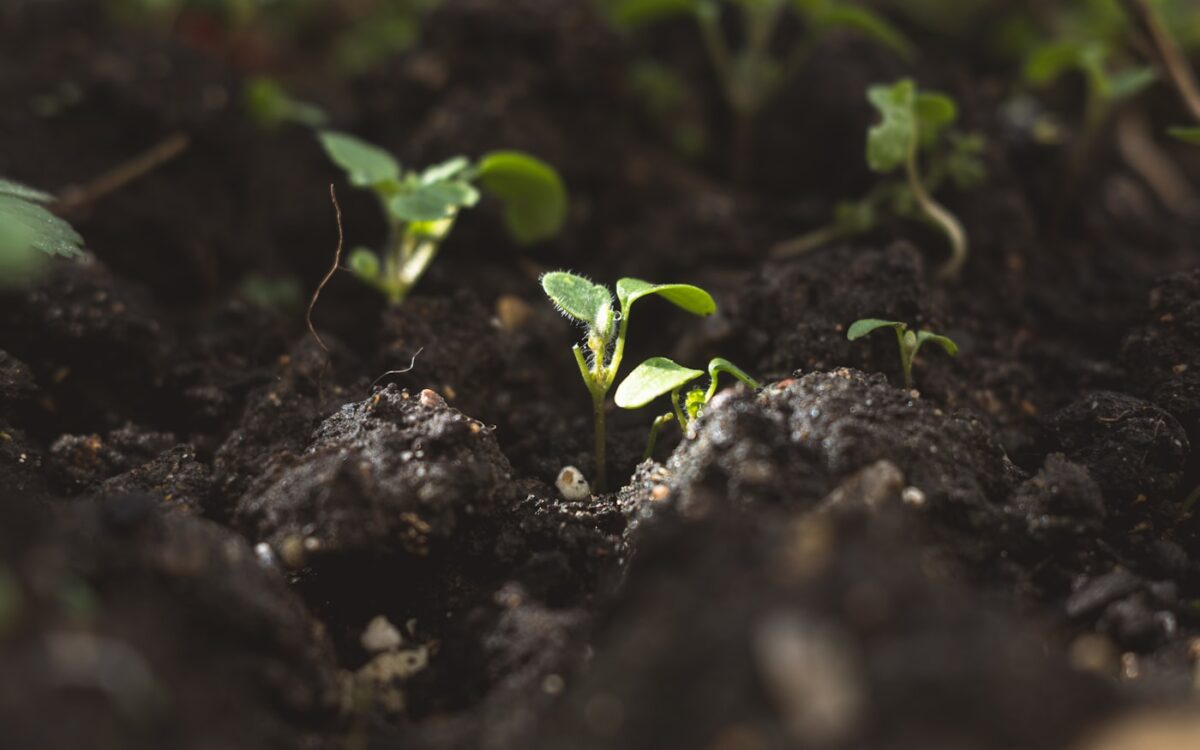
To be ji earth born in spring is to be soft, cultivable soil turning over just as the season belongs to Wood. Jǐ 己 (Yin Earth) is not the mountain but the garden bed — moist, low-key loam that quietly grows things rather than towering over them. Spring is the Wood season, carried by the branches 寅卯辰 and running roughly from Feb 4 to May 4 in the solar calendar, from Li Chun (立春 lìchūn) to just before Li Xia (立夏 lìxià).
Those dates matter more than the month on a birth certificate. Ba Zi (八字 bāzì) seasons run on solar terms, not on calendar months, so a birthday in early February can fall on either side of the boundary. If you are close to a cutoff, confirm your true month pillar with the free chart calculator before you draw any conclusions about seasonal strength.
Dormant (死 sǐ): Ji Earth born in spring is against the season
In the classical five-phase table, Earth in spring sits in the state 死 (sǐ), Dormant — the weakest baseline of the five. Wood controls Earth, so the season itself is pressing on your element. For soft Ji soil this is a very particular experience. The garden bed is not being crushed so much as claimed: the roots of spring are driving straight through it, drawing on it, reshaping it for their own growth. Ji Earth rarely resists this by force. Its instinct is to yield and absorb, which is both the vulnerability and the quiet strength of the state.
Read this as baseline, not verdict. A Dormant Day Master is not weak in character; the person may be capable, subtle and hardworking. It means the raw seasonal support behind the stem is low, so effort alone does less than it would in a friendlier season. Support and timing carry more weight than push. The soft-soil reading is the point here: where Wu 戊 Earth born in the same season would feel the pressure as erosion of something solid, Ji feels it as being worked over and planted into.
What this season asks of you
Spring is the power and pressure season for Earth: Wood controls Earth, so the seasonal energy shows up as demand, obligation and authority bearing down. When the Day Master is this lightly rooted, the classic need is resource and allies. In elemental terms that means Fire (which produces Earth and warms the cold spring soil) and companion Earth to firm up the ground. Metal can also help by draining and taming the aggressive Wood before it overwhelms the field. That weak-chart ordering, and when it flips, is worked through in favorable elements for Earth Day Masters.
Practically, ji earth born in spring does best when it is not left to face demands alone. This is a chart that benefits from mentors, structure and a warm environment rather than raw self-assertion. Pace matters too: pushing hard against a season that controls you spends energy for little return, while patient timing lets support arrive. If Fire and helpful Earth appear elsewhere in the chart or in the luck pillars, the Dormant baseline lifts considerably. For the wider logic of which elements help a soil Day Master, our note on the five elements in Ba Zi lays out the producing and controlling cycles.
The pressure is not uniform: 寅, 卯 and 辰
The three spring branches bear on the soil differently. 寅 Yín (Tiger), the first month, hides Jiǎ 甲, Bǐng 丙 and Wù 戊: the Jiǎ is Ji’s Direct Officer 正官 — firm, structured pressure — but the buried Bǐng is Direct Resource 正印, a seed of warmth inside the demand, and the Wù a companion. An early-spring Ji is pressed and quietly provisioned at once. 卯 Mǎo (Rabbit), the middle month, hides only Yǐ 乙, Ji’s Seven Killings 七杀 — the sharpest, least cushioned month of the soil’s year, where the weak-state playbook applies without discount. 辰 Chén (Dragon), the last month, is an Earth branch itself, hiding Wù 戊, Yǐ 乙 and Guǐ 癸 — a Rob Wealth 劫财 companion under the fading Wood, which is exactly where the transitional-month nuance below takes over.
The caveats that change everything
Season sets perhaps half the strength verdict. The rest comes from roots in the branches, the hidden stems (藏干 cánggān) they carry, and the overall balance of the four pillars. A Ji Earth born in a Dormant spring who nonetheless sits on an Earth branch, holds Fire in the chart, or receives supportive luck pillars can read as perfectly capable of standing its ground. Strength is always the whole picture, which is why we treat it as a judgement rather than a label in strong versus weak Day Master.
There is one nuance specific to Earth. Classical doctrine gives Earth its own prosperity in the four transitional months (土旺四季 tǔ wàng sìjì) — the last roughly eighteen days of each season, carried by the Earth branches 辰未戌丑 and strongest in late summer (未). Spring closes in the Dragon month (辰), an Earth branch. So a Ji Earth born in the tail of spring reads noticeably stronger than the season core suggests, because that transitional window quietly rewrites the verdict. This is exactly the kind of detail that separates a careful reading from a lazy one, and it is worth checking against your own Ji Earth Day Master profile. For contrast, see how the same soil reads when the season backs it in Ji Earth born in summer — and to complete the year, Ji Earth born in autumn shows the field spending itself into the harvest, while Ji Earth born in winter shows it straining to hold the flood.
Before you settle on Dormant for yourself, confirm two things: that Ji Earth is genuinely your Day Master, and that spring is genuinely your birth season by solar term. Plot both for free with the Butcher Boy calculator and let the full chart, not a single seasonal line, tell you how this soil actually stands.