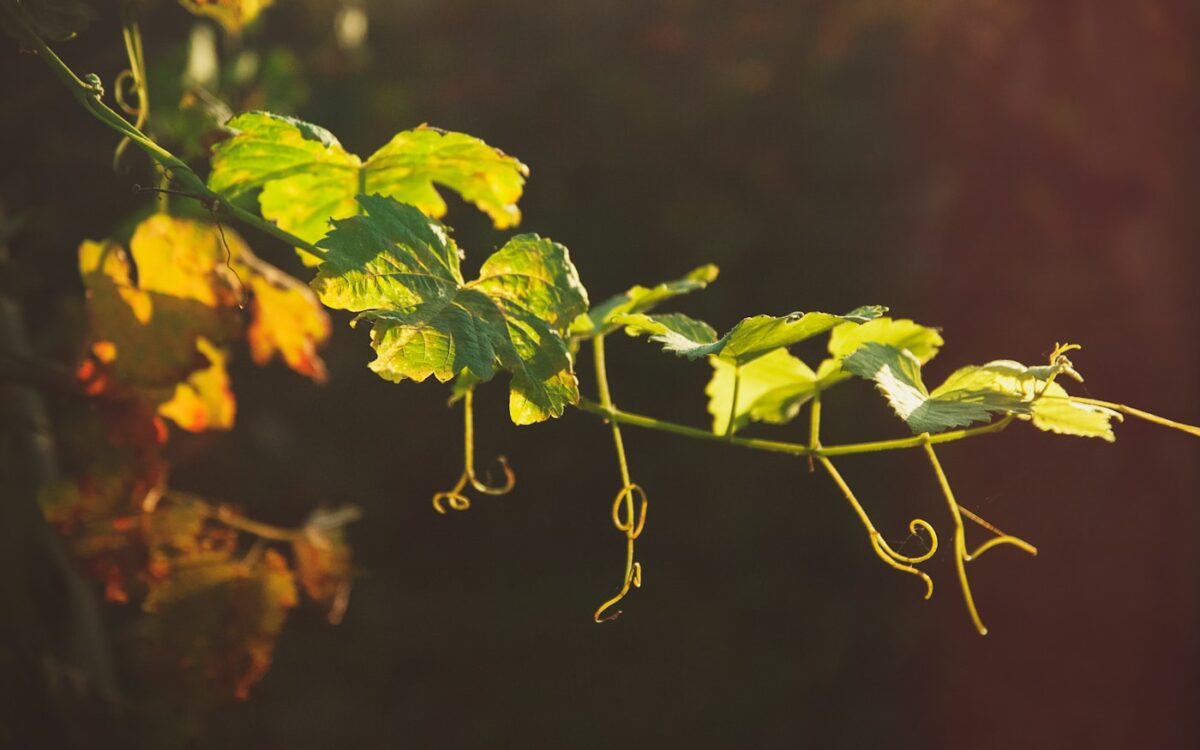
Yi wood born in summer is the tender vine or flowering plant of the sixty-pillar system meeting the year’s most radiant heat. Your Day Master (日主 rìzhǔ) is Yǐ 乙, the yin wood — grass, creeper, cultivated bloom rather than the standing trunk. Summer in Ba Zi (八字 bāzì) is the Fire season, carried by the branches 巳午未 and running from May 5 to Aug 6, from Li Xia (立夏 lìxià) to just before Li Qiu (立秋 lìqiū). Note that these are solar-term seasons, not calendar months: your birth belongs to summer only if it falls inside that solar window, which is why practitioners check the exact boundary on the Butcher Boy calculator rather than guessing from the date.
The picture to hold is a soft green plant in full sun. Yi wood loves warmth, but it is not built to store it. The vine keeps producing, keeps flowering, and quietly gives itself away to the heat.
Resting (休 xiū): the retired-general state
The seasonal state for this combination is 休 xiū — Resting — your element feeds the season: energy flows out; mild drain, the retired-general state. Fire is the child of Wood, so in summer your own element is busy producing rather than holding. You are not attacked here, and you are not weak in the dramatic sense; you are simply spending.
For Yi wood specifically this reads gentler than it would for a tall Jiǎ 甲 trunk. A large tree in summer loses shade and moisture and can look scorched. The yin vine, by contrast, is made to flower — it converts warmth into color and fruit with almost no resistance. The retired-general image fits: still capable, still respected, but choosing to pour energy outward instead of standing guard. The risk is not collapse; it is depletion by generosity.
What this season asks of you
Summer is an output season for Yi wood — the reference line is exact: Fire relative to Wood is produced by Wood (output season). When you are born into your own output, expression comes easily and support does not automatically follow it. The classic need is water. A little Guǐ 癸 dew or Rén 壬 river in the chart keeps the vine from wilting as it flowers, and roots — a branch of Wood underneath — give the plant something to draw on while it spends.
The practical reading for yi wood born in summer is to protect the source, not the output. Talent is not your problem; sustaining it is. Look for Resource (Water) and companions (other Wood) to refill what the season draws out. Where a strong Day Master in a prosperous season wants outlets, you already have the outlet — what you want is the well behind it.
This mirrors the standard weak-side rule of thumb — resource and companions favorable, more output, wealth and power unfavorable — with the standing caveat that season and chart structure can override it. The stem-by-stem detail is collected on the favorable elements for Wood Day Masters page.
In a working reading this shows up as people who produce beautifully and burn out quietly. The vine flowers on cue, wins the audience, and then has nothing left because no one watered the root. The fix is rarely more ambition; it is a Water star or a companion pillar that lets the plant keep giving without spending itself down to the stem.
The three summer months are not the same heat
Which branch you were born under grades the drain. The Snake month (巳 sì) opens the season; its hidden stems (藏干 cánggān) are Bǐng 丙, Wù 戊 and Gēng 庚 — early summer’s fire is bright but young, and the branch carries no Wood at all. The Horse month (午 wǔ) is peak Fire, hiding Dīng 丁 and Jǐ 己; this is the strongest pull on the vine’s moisture and the month where a missing Water star is felt most. The Goat month (未 wèi) closes the quarter with hidden stems Jǐ 己, Dīng 丁 and Yǐ 乙. It is one of the four transitional Earth months (辰未戌丑) where Earth strengthens at the season’s end — and for a Yǐ Day Master it holds one real gift: the Yǐ hidden inside 未 is the vine’s own minor root, a thread of self buried in the hot soil. A 未-month Yi is still summer-born and still spending, but it is not quite rootless while it does so.
The caveats that change everything
Season sets roughly half the strength verdict, no more. A Yi wood chart born in summer can still read as balanced or even strong if it carries Water roots, hidden stems that feed Wood, or a nest of companions in the other pillars. Equally, a summer full of extra Fire and dry Earth turns the mild drain into real exhaustion. The month branch tells you the climate; the roots, the hidden stems and the rest of the chart tell you whether the plant is watered or parched.
This is why no single pillar decides the case. Work through the full strong versus weak Day Master judgement before you act on a seasonal label, and read the temperament of the stem itself in the Yi Wood Day Master profile. If you want to see how the same vine behaves once the heat breaks, compare this with Yi wood born in autumn, where the season stops feeding and starts pressing. The other two quarters round out the picture: Yi wood born in spring shows the same plant owning its season outright, and Yi wood born in winter shows it fed — sometimes over-fed — by the year’s deepest Water. Summer sits between those poles: not opposed, not supported, simply pouring itself out.
One more distinction worth carrying into a reading: resting is the friendliest of the three non-strong states. Confined charts fight the season and dormant charts are pressed by it, but a resting chart is only ever spending into work it chose. That is why the corrective here is so modest — a source, not a rescue.
Before you settle on what your summer really means, confirm both halves of the picture — that Yǐ wood is genuinely your Day Master and that your birth falls inside the summer solar terms. Plot your chart free with the Butcher Boy calculator and read your season against your roots, not against the calendar.