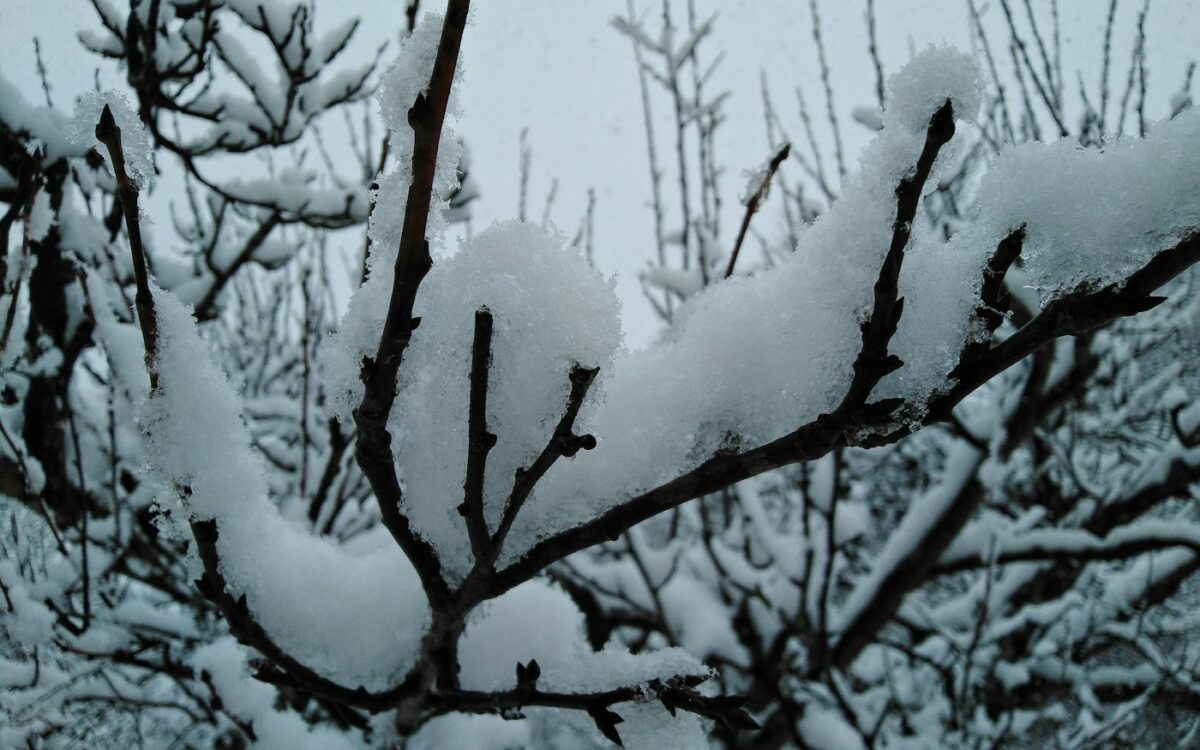
Yi wood born in winter is the tender vine or flowering plant standing in the season of water and cold. Your Day Master (日主 rìzhǔ) is Yǐ 乙, the yin wood — creeper, grass, cultivated bloom rather than the standing trunk. Winter in Ba Zi (八字 bāzì) is the Water season, carried by the branches 亥子丑 and running from Nov 7 to Feb 3, from Li Dong (立冬 lìdōng) to just before Li Chun (立春 lìchūn). Because these are solar-term seasons and not calendar months, a late-January birth can still count as winter until Li Chun turns the year — the Butcher Boy calculator fixes the exact boundary so you assign the season correctly.
The image is a plant whose season is generous underground: water everywhere, roots fed, but the air itself is cold. Winter gives Yi wood plenty to drink and not much warmth to grow into. That tension is the whole reading.
Supported (相 xiàng): strong by backing
The seasonal state here is 相 xiàng — Supported — the season feeds your element: strong by backing; comfortable, resourced, sometimes over-sheltered. Water produces Wood, and winter is Water at full strength, so the season pours resource into your element. You begin comfortable, well-backed, rarely short of support.
For the yin vine this reads as abundance with a catch. A Jiǎ 甲 trunk in winter can float loose if the water runs too deep; the smaller Yi plant is less likely to be uprooted, but it is very easily over-sheltered — kept so wet and so protected that it never has to reach for anything. Supported is a strong state, not a soft one, yet for Yi wood the danger is comfort. Plenty of resource, plenty of care, and sometimes not enough reason to flower.
What this season asks of you
Winter is a resource season for Yi wood — the reference line is exact: Water relative to Wood produces Wood (resource season). Born into your own resource, you get Print star, learning and protection almost by default. The temptation is to keep absorbing. For a supported Day Master the working advice is the opposite of what a weak chart needs: seek outlets and expression, and avoid piling on more support.
In practice, yi wood born in winter usually wants Fire — a little Bǐng 丙 sun or Dīng 丁 warmth to take the chill off the water and let the plant actually grow rather than merely sit fed. Output and Wealth give the resourced vine something to do with its backing. The classic error with this combination is adding more Water or more Wood to an already comfortable chart; that deepens the shelter instead of ending it.
This tracks the strong-side rule of thumb — output, wealth and power favorable; resource and companions unfavorable — with the standing caveat that season and chart structure can override it. The element-by-element version for Wood stems is set out on the favorable elements for Wood Day Masters page.
In readings this pattern often belongs to people who are well cared for and quietly restless — supported by family, education or a stable role, yet aware that the warmth is missing. A single strong Fire star, or a Fire run in the luck pillars, is frequently the thing that turns a sheltered winter chart into a productive one. The resource was never the problem; the lack of a reason to use it was.
Three winter months, three depths of water
The Pig month (亥 hài) opens the season with hidden stems (藏干 cánggān) Rén 壬 and Jiǎ 甲. For a Yǐ Day Master that hidden Jiǎ matters: it is a Wood root inside the resource month, the vine growing against an elder trunk, and it makes early-winter charts the most self-possessed version of this combination. The Rat month (子 zǐ) is the depth of the season, hiding Guǐ 癸 alone — pure Water, maximum feeding, and the month where the over-sheltered caution is most deserved. The Ox month (丑 chǒu) closes winter with Jǐ 己, Guǐ 癸 and Xīn 辛; it is one of the four transitional Earth months (辰未戌丑) where Earth strengthens at each season’s end, so a 丑-month Yi stands on cold, heavy ground with a sliver of Metal buried in it — supported still, but with more to push against and more reason to want the Fire.
The caveats that change everything
A supported season settles only half the question. Yi wood born in winter can tip from comfortable to genuinely cold if the chart carries frozen Earth, heavy Metal feeding yet more Water, and no Fire to warm it — the over-sheltered plant can chill rather than thrive. Equally, a winter chart with a good Fire root reads as balanced and productive. The season names the backing; the hidden stems, the roots and the presence or absence of warmth decide whether the resource nourishes or drowns.
Read the label as one input among several. Work the full strong versus weak Day Master judgement and the wider five elements in Ba Zi before acting, and study the stem’s own character in the Yi Wood Day Master profile. For the version of this vine at the opposite pole of the year, when the season is fully its own, see Yi wood born in spring — and to complete the circuit, Yi wood born in summer shows the plant spending its strength into heat, while Yi wood born in autumn shows it pressed by the blade. Winter’s supported state sits second in that hierarchy, behind spring alone.
One working distinction is worth keeping. Supported strength is borrowed strength: it depends on the feeding continuing. A luck pillar that dries the Water or a chart that buries it under Earth changes the supply line, where a spring vine’s own-element strength would simply persist. That is why practitioners read winter charts with one eye on the current luck pillars — the backing is real, but it has a source that can turn.
Before you decide what a well-fed winter means for you, confirm both halves — that Yǐ wood is truly your Day Master and that your birth falls inside the winter solar terms. Plot your chart free with the Butcher Boy calculator and weigh your season against your roots, not the calendar month.