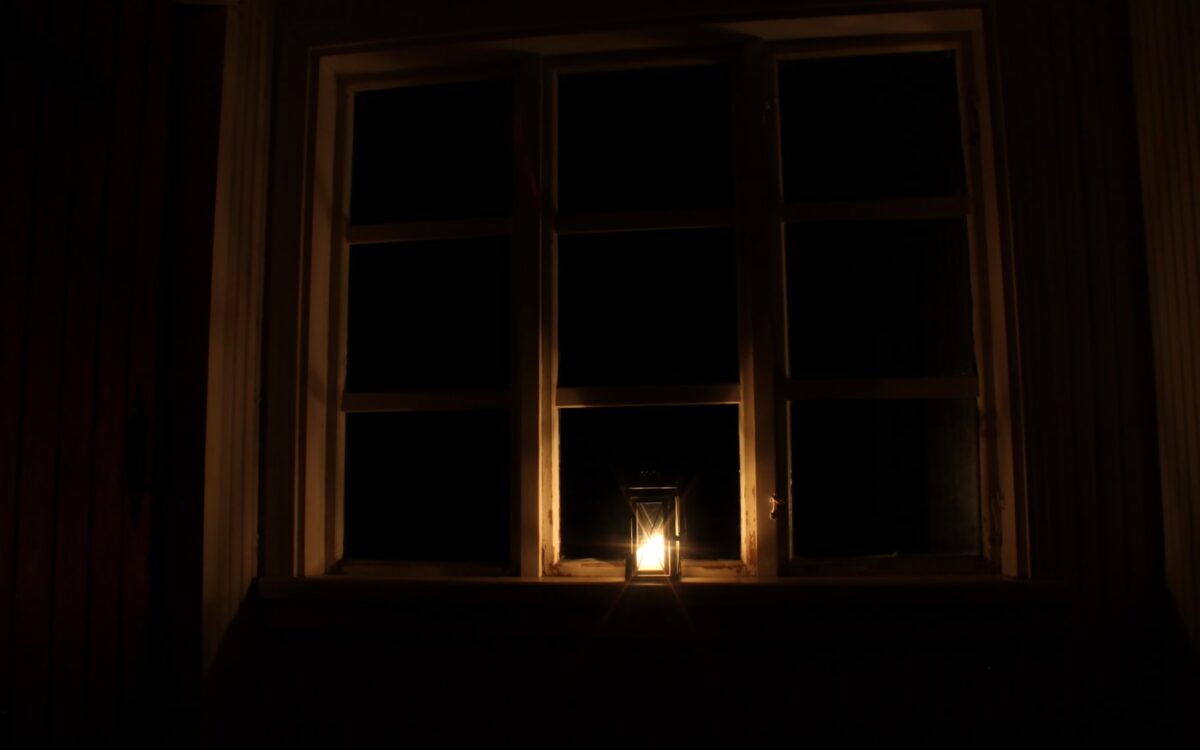
A Ding Fire born in winter is the lamp flame lit in the coldest, wettest quarter of the year. Dīng Fire (丁 dīng) is the Day Master (日主 rìzhǔ) of the candle, the hearth, the focused warmth that works up close rather than the broad daylight of its yang cousin. Winter is the Water season, branches 亥子丑, running Nov 7 – Feb 3 (from Li Dong 立冬 to before Li Chun 立春). Those dates are solar terms (節氣 jiéqì), not calendar months — the season turns on the sun’s position, so a birthday in early November can fall on either side of the boundary. Confirm which side you were born on with the Butcher Boy calculator before you trust any seasonal reading.
Winter is the season that controls Fire directly. Water is the element that puts out flame, and here it holds the whole quarter. For the small, contained Ding flame, that is a demanding place to be born.
Dormant (死 sǐ): the season controls your element
The classical state here is 死 sǐ — Dormant — the season controls your element: weakest baseline; support and timing matter more than effort. For Ding Fire specifically, this is the lamp burning in a draughty, freezing room. The flame does not go out — Ding is stubborn, it clings to its wick — but it gives less light and less heat than the same flame in any other season, and it spends most of its energy simply staying alive.
This reads differently from a Bing Fire in the same winter, and the difference is instructive. Bing is the sun: even at its weakest it is a large body of Fire. Ding is a single point of flame, so the dormant state bites harder and the need for shelter and fuel is more acute. A Ding born in winter is not a weak person — it is a person whose native heat needs guarding.
What this season asks of you
Because winter is Fire’s power and pressure season — Water controls Fire — a Ding Fire born in winter is a weak-season chart by default, and the practical priorities follow the weak-state playbook: resource, allies, and timing rather than brute output. Resource for Ding means Wood (木 mù): fuel for the flame. A well-placed Jia or Yi Wood, or a Wood branch, is the log that keeps the lamp burning through the cold. Allies mean other Fire — a Bing sun to warm the surroundings, a Ding companion to share the load. Why resource and companions come first for a weak flame, and why output, wealth and power wait, is the subject of the favorable elements for Fire Day Masters guide.
The mistake to avoid is trying to shine your way out of the season by sheer effort. A dormant flame that flares hard just burns its fuel faster. The Ding move is to conserve, gather Wood, and pick the moments — an hour pillar with Fire in it, a luck pillar that brings a Wood or Fire cycle — where the surrounding climate finally supports expression. Timing is the whole game for a weak Day Master.
Which winter month holds your flame: 亥, 子 or 丑
The Water season is carried by three branches, and their hidden stems change how hard the cold bites the lamp.
| Branch | Place in winter | Hidden stems (藏干 cánggān) | Reading for Dīng |
|---|---|---|---|
| 亥 Hài (Pig) | First month | Rén 壬, Jiǎ 甲 | Direct Officer 正官 pressure with a buried Jiǎ — Direct Resource 正印 — a log of fuel stored inside the flood |
| 子 Zǐ (Rat) | Middle month | Guǐ 癸 | Pure Yin Water: Seven Killings 七杀 undiluted — the sharpest pressure of the lamp’s year |
| 丑 Chǒu (Ox) | Last month | Jǐ 己, Guǐ 癸, Xīn 辛 | Transitional Earth month — the frozen ground banks the Water, easing the pressure as spring approaches |
The Pig month is the kindest of the three: the very branch that presses the flame also stores its resource, and a chart that lets that Jiǎ surface has a lifeline built in. The Rat month is the sternest test — Guǐ, the lamp’s Seven Killings, stands alone in the branch. And 丑, one of the transitional Earth branches 辰未戌丑 where Earth strengthens at the season’s end, softens the flood before Li Chun turns the year.
The caveats that change everything
Season sets the baseline, but it is only half the strength verdict. The other half is rooting: whether the rest of the chart gives Ding somewhere to stand. A Ding born in the depth of winter but sitting on a Fire branch, backed by Wood, and unclashed can read as workable rather than fragile. Equally, a Ding that looks fine on the surface can be genuinely thin once you weigh its hidden stems (藏干 cánggān) and find no Wood or Fire anywhere. Roots, the surrounding stems, clashes and combinations all finish the judgement the season only opens.
This is why practitioners never stop at the month branch. Work through the full method in our guide to a strong versus weak Day Master, and read the temperament of the flame itself on the Ding Fire Day Master profile. For contrast, the same lamp in its resource season reads far more comfortably — see Ding Fire born in spring, where Wood feeds the flame instead of Water smothering it. The remaining two quarters complete the picture: Ding Fire born in summer is the lamp at maximum native strength, and Ding Fire born in autumn is the flame working uphill through the wealth season — each a different answer to the question winter asks hardest.
Winter is the hardest quarter for the lamp, but hardship in a chart is not a verdict — it is a set of instructions. To see whether your own Ding is a guttering flame or a well-fed one, confirm both your Day Master and your birth season with the Butcher Boy calculator, then read the rest of the chart around it.