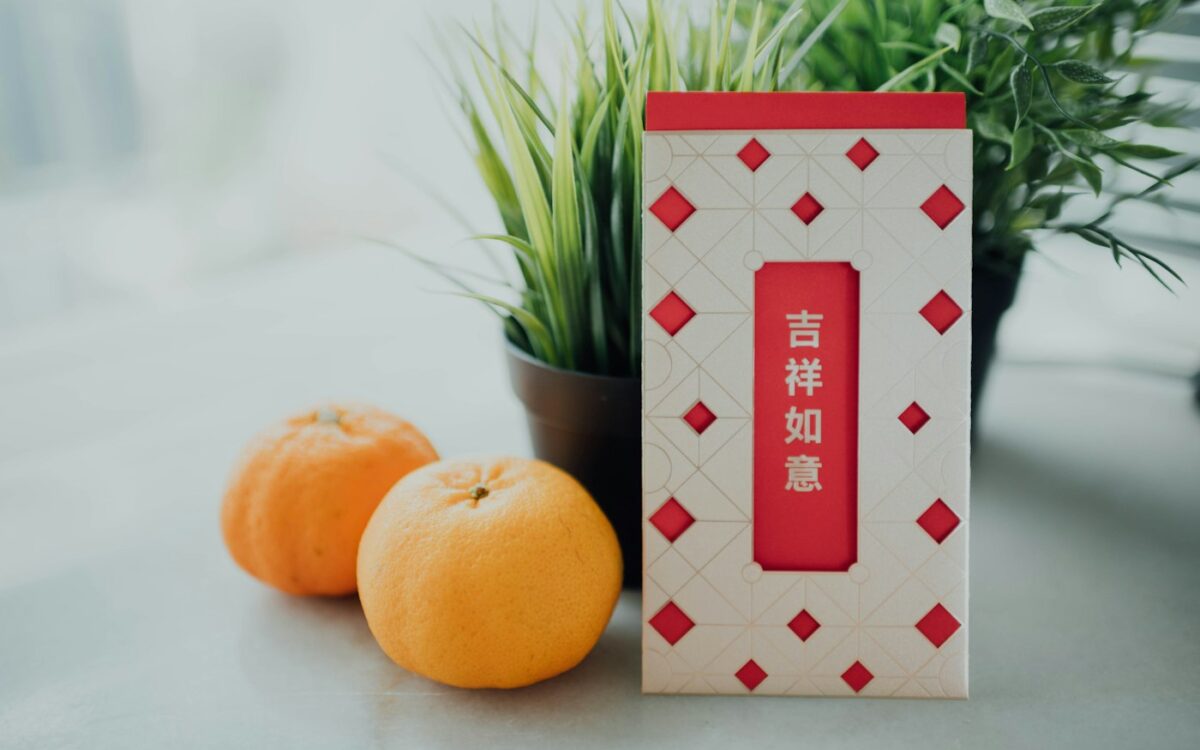
Chinese New Year 2027 falls on Saturday 6 February 2027, the first day of the first lunar month (正月初一 zhēngyuè chūyī), and it opens the year of the Fire Goat. For comparison, the 2026 New Year fell on 17 February 2026. The Chinese New Year greetings below are the ones you will hear in Singapore homes, offices and family visits across the fifteen days of the season, with the hanzi, the pinyin, what each phrase means and when it fits.
Greetings are short, set phrases, usually four characters, and they are said without fuss. Most people use two or three and repeat them all season. Choosing the right one for the person in front of you is the small courtesy that gets noticed.
The core Chinese New Year greetings
These are the Mandarin phrases that carry most of the season. Any of them can be said on its own, or two can be paired, as in “新年快乐,万事如意”.
| Hanzi | Pinyin | Meaning | When to use |
|---|---|---|---|
| 新年快乐 | xīnnián kuàilè | Happy New Year | Anyone, any time in the season; the safe default |
| 恭喜发财 | gōngxǐ fācái | Wishing you prosperity | Friends, colleagues, shopkeepers, family visits |
| 万事如意 | wànshì rúyì | May all go as you wish | A general wish, often paired with another phrase |
| 身体健康 | shēntǐ jiànkāng | Good health | Elders and older relatives |
| 年年有余 | niánnián yǒuyú | Surplus every year (余 sounds like 鱼, fish) | Households, and at the reunion dinner when fish is served |
| 大吉大利 | dàjí dàlì | Great luck and profit | Business owners and colleagues |
| 步步高升 | bùbù gāoshēng | Rising step by step | Careers: colleagues, friends starting a new role |
| 心想事成 | xīnxiǎng shìchéng | May your wishes come true | Friends and younger relatives with plans for the year |
| 岁岁平安 | suìsuì píng’ān | Peace year after year | Families, elders, anyone travelling |
| 学业进步 | xuéyè jìnbù | Progress in studies | Students and children in school |
A practical pattern: open with 新年快乐 or 恭喜发财, then add one phrase matched to the person. Health for a grandparent, studies for a nephew, career for a colleague. It sounds considered without sounding rehearsed.
Dialect forms you will hear in Singapore
Singapore’s Chinese New Year is multi-dialect, and many older relatives will greet you in Cantonese or Hokkien rather than Mandarin. The phrase you will hear most is 恭喜发财 in two dialect forms:
- Cantonese: “Kung Hei Fat Choi”
- Hokkien: “Kiong Hee Huat Tsai”
Romanised spellings of dialect greetings vary from family to family, and Teochew and other dialect forms are spelled in several ways. If you are unsure, the Mandarin form is always understood, and answering an elder in their own dialect, even imperfectly, is usually received warmly.
Two greetings made for the Goat year
Each zodiac year brings its own wordplay. The Goat is 羊 (yáng), and two established phrases borrow its sound, which is why they come out every Goat year. If you want one or two greetings that are specific to 2027, these are the ones.
三阳开泰 sānyáng kāitài
“Three yang bring peace.” This is a classic New Year phrase in any year. In a Goat year it gains a second layer, because 阳 (yáng) sounds like 羊, so the wish for peace reads as a nod to the animal of the year as well.
喜气洋洋 xǐqì yángyáng
“Brimming with joy.” Here 洋 (yáng) sounds like 羊, so the phrase reads as a light pun on the year. It suits almost anyone and is a pleasant alternative to repeating 恭喜发财 at every door.
For more on the animal and the element of the year, see the Year of the Goat overview and the Fire Goat year page.
Etiquette and the ang pow
The order matters more than the phrase. Families greet elders first, then the rest of the household. When visiting, the greeting comes at the door, before anything else.
The red packet, 红包 (hóngbāo), is known in Singapore by its Hokkien name, ang pow. By custom, ang pows are given by married people to the unmarried and to children. The receiver offers a greeting in return, and a phrase such as 身体健康 for an older giver is a natural fit.
Folk custom also asks for care with words in the first days of the year. Families avoid talk of death, illness or breaking, and steer conversation toward the year ahead. These are habits of tone, not rules with consequences, and most households keep them lightly.
Greetings carry into the meal as well. At a lo hei toss, several of the phrases above, such as 年年有余, are called out as each ingredient goes onto the plate.
The other festival with its own set phrases is Mid-Autumn; see Mid-Autumn Festival wishes.
Greetings usually come with a red packet; see ang bao etiquette for amounts and manners.
The Ba Zi view of the New Year
In Ba Zi (八字 bāzì), the year does not turn on New Year’s Day. The new year pillar, 丁未 (Dīng Wèi, Yin Fire over Earth Goat), begins at Li Chun (立春 lìchūn), on 4 February 2027 at 09:45 Singapore time, two days before the lunar New Year. The day pillar of New Year’s Day itself, 6 February 2027, is 丙辰 (Bǐng Chén, Yang Fire over Earth Dragon), in the 壬寅 month, with the day officer 满 (Mǎn, Full) and a clash with the Dog. How the twelve day officers work is explained in the Tong Shu guide.
That is useful context, but it says little about any one person. Whether the Fire Goat year feels supportive or demanding depends on how 丁未 meets your own chart. The full season, including the dates and the annual outlook, is set out in the Chinese New Year 2027 guide.
Chinese New Year greetings wish someone well for the year; a chart shows what the year is actually working with. Find how the 丁未 year meets your own pillars: plot your chart free with the Ba Zi calculator.