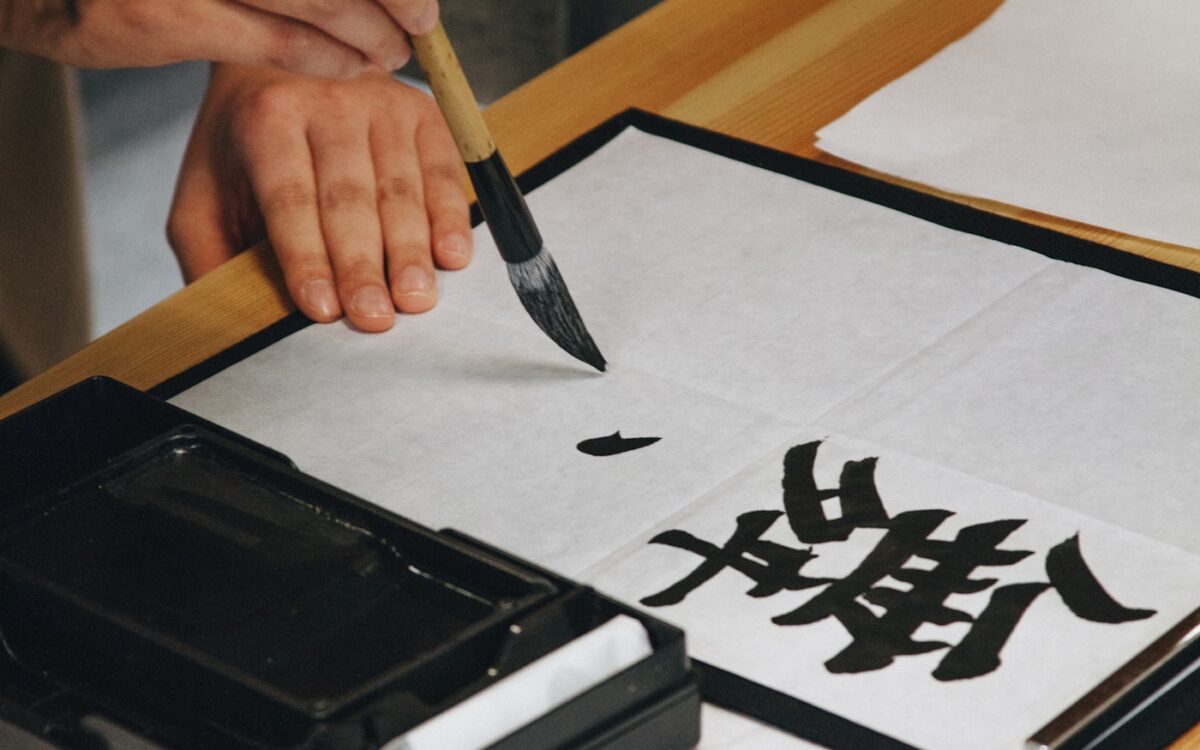
Every Ba Zi chart has a fixed point: the stem of your day pillar, called the Day Master (日主 rìzhǔ). It is the single most useful thing to know about your chart — and the most commonly misunderstood.
What the Day Master actually is
It is not a star sign. The Day Master is the unit of measurement for the rest of the chart: what strengthens you, what drains you, what you control, what controls you. Career, wealth, relationships — in Ba Zi these are not abstract categories but named relationships to your day stem. Change the Day Master and the same seven other characters mean entirely different things.
Why the day stem, and not the year everyone knows from zodiac placemats? Classical practice settled on the day pillar as the self centuries ago: the year describes your generation and family backdrop, the month your season and career climate, the hour your output and later life — the day is the only pillar that is unambiguously you. It is also why two people born in the same year can be profoundly different: they share one character out of eight.
Ten stems, ten temperaments
There are ten Day Masters — the five elements in yang and yin form. A Yang Fire person and a Yin Fire person share an element but not a temperament: Bǐng 丙 is the sun, visible from a distance and spending itself freely; Dīng 丁 is the lamp flame, precise and steady in the dark. The image attached to each stem is not decoration; it is a compressed instruction for how that stem gains and loses strength.
The ten, in cycle order. Jiǎ 甲, Yang Wood, is the tall tree — upright, principled, growing steadily toward the light. Yǐ 乙, Yin Wood, is the climbing vine — flexible, resourceful, thriving by adapting around obstacles. Bǐng 丙, Yang Fire, is the sun — direct, warming, impossible to ignore. Dīng 丁, Yin Fire, is the lamp flame — penetrating, environment-sensitive, steady where the sun cannot reach.
Wù 戊, Yang Earth, is the mountain — reliable, containing, hard to argue with. Jǐ 己, Yin Earth, is the field soil — nurturing, absorbent, quietly productive. Gēng 庚, Yang Metal, is the raw blade — decisive, dutiful, needing a worthy problem to cut. Xīn 辛, Yin Metal, is the finished jewel — refined, exacting, quality over quantity. Rén 壬, Yang Water, is the river — ambitious, connective, always moving. Guǐ 癸, Yin Water, is the morning dew — subtle, perceptive, reaching places force cannot.
Each has a full profile behind its link, and we set all ten side by side in the field guide to the ten Day Masters.
Strong or weak is not good or bad
The first technical judgement on any Day Master is its condition: supported by the season and surrounding characters, or outnumbered by them? A “weak” Day Master is not a weak person — it simply means different elements act as your allies. Get this one call wrong and every recommendation that follows is backwards, which is why it gets its own guide: Strong vs weak Day Master.
The stem and its condition together are why the same image reads two ways. A strong Jiǎ tree wants Metal — pruning, standards, pressure. A weak one wants Water and fellow Wood before anyone reaches for the saw. The temperament stays; the prescription flips.
How to find yours
You need an accurate birth date; the hour helps but is not required for the Day Master itself. Plot your chart — the calculator highlights your day stem and gives you the one-line portrait. Then check it against the season you were born into: that pairing — stem plus season — is the opening sentence of any honest reading.
One caution for the small hours: because the Chinese day is framed by the Zǐ 子 hour, births between 11 p.m. and 1 a.m. sit near a day boundary, and schools differ on the details. If you were born in that window, let the calculator make the call rather than assuming the calendar date settles it.
What to do with it
Once you know your Day Master and its condition, generic advice becomes personal: which years favour expansion and which favour consolidation, why certain colleagues energise you and others quietly exhaust you, and what the current luck pillar is actually doing to you. That is the working value of Ba Zi — not prediction, but timing. For the full method, start at how to read your chart.
Common questions
Can my Day Master change over time? No. The natal chart is fixed; what changes is the environment the luck pillars and annual stems bring to it. A Dīng flame in a windy decade and the same flame in a sheltered one behave differently, but the flame is the flame.
Is my Day Master the same as my zodiac element? No — the “Fire” in Fire Horse is the year stem, describing the year of birth, not you. Your Day Master comes from the day pillar and is frequently a different element altogether.
Do I share a Day Master with everyone born on my date? Yes — the day pillar is the same worldwide for a given Chinese calendar day, so roughly one person in ten shares your day stem. The other seven characters, the luck pillars and the life around them do the differentiating; the Day Master is where a reading begins, never where it ends.
Which Day Master is best? None. Every stem produces both flourishing and struggling charts; condition, season and structure decide which — the stem itself is just the starting material. Find yours first: the calculator is free, and your day stem is the first thing it shows you.